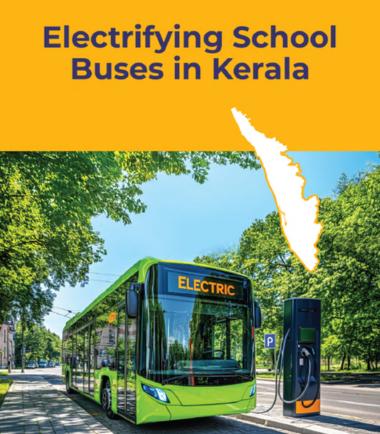
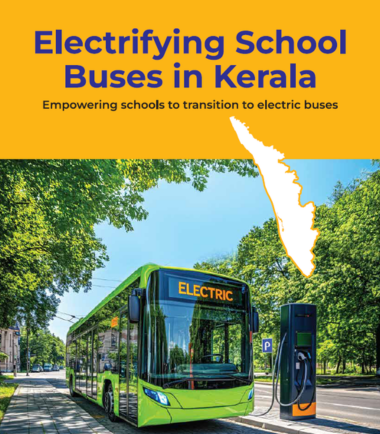
Handbook on Electrifying School Buses in Kerala

Fuel mix strategies for decarbonising India’s road transport sector

Investigation of the Impact of Policy Awareness, Technical Knowledge, and Environmental Consciousness on EV Adoption: Evidence from Four Indian Cities

India’s EV transition needs target-driven interventions

Will CCTS move the needle for a clean transport sector?

Revving Up Revenue: Making Affordable Public EV Charging Viable

The Road to Excellence: How Indian States are driving the EMobility sector: Policy Updates & Analysis of the Key States


Charging Technology Options for E-Buses in Bengaluru

Planning Tool for E-Bus Deployment

Battery Technology Roadmap: What Are Some Emerging EV Battery Technologies and Compositions?

Solar Energy–Based EV Charging: A Pilot and Techno-Economic Study

Charging Stations At Residential Apartments Are Key To EV-Charged Future

Press Release – Planning Tool to Facilitate E-bus Adoption

Public Charging Infrastructure In Cities – Challenges, Data Needs

Options to Tie Solar Energy with Electric Vehicle Charging

Costing Analysis of Scalable Carbon-Based Perovskite Modules Using Bottom Up Technique

Location Planning for Public Electric Vehicle Fleet Charging Stations

Technology Assessment Framework: Methodology Note

Assessment Framework to Identify Location for Public Charging Stations

Charging up for Electric Mobility

Lithium-ion battery supply chain: enabling national electric vehicle and renewables targets

Urban Transport Planning in Bengaluru: A Polycentric Governance System

Reviewing India’s National Mission on Electric Vehicles

App-Based Shared Mobility: Policy Imperatives

Transition to All-Electric Public Transportation: Energy Resource Assessment