


Just over a year ago, an artificial intelligence (AI)-generated recreation of Sir David Attenborough’s iconic voice went viral. BBC News shared his reaction to this: ‘Having spent a lifetime trying to speak what I believe to be the truth, I am profoundly disturbed to find that these days my identity is being stolen by others and greatly object to them using it to say whatever they wish.’

With 65% of Indian enterprises having adopted AI in at least one function as of 2023, most of us are aware of the mistakes or hallucinations AI can make. As AI has trickled down into our daily lives—at an alarming pace—a new risk has emerged: AI deception. The UN Secretary General’s Scientific Advisory Board defines AI deception as ‘when an AI system misleads people or other systems about what it knows, intends, or can do’.
This raises major concerns about how such deception could affect organisations, communities, or even countries as AI becomes embedded in communication, decision-making, and policymaking processes.
As many AI systems are trained primarily in the Global North, they may be unfamiliar with the cultural nuances and biases specific to India or the Global South. In such cases, deceptive outputs may distort developmental priorities, upend societal expectations, and ultimately erode trust in institutions.
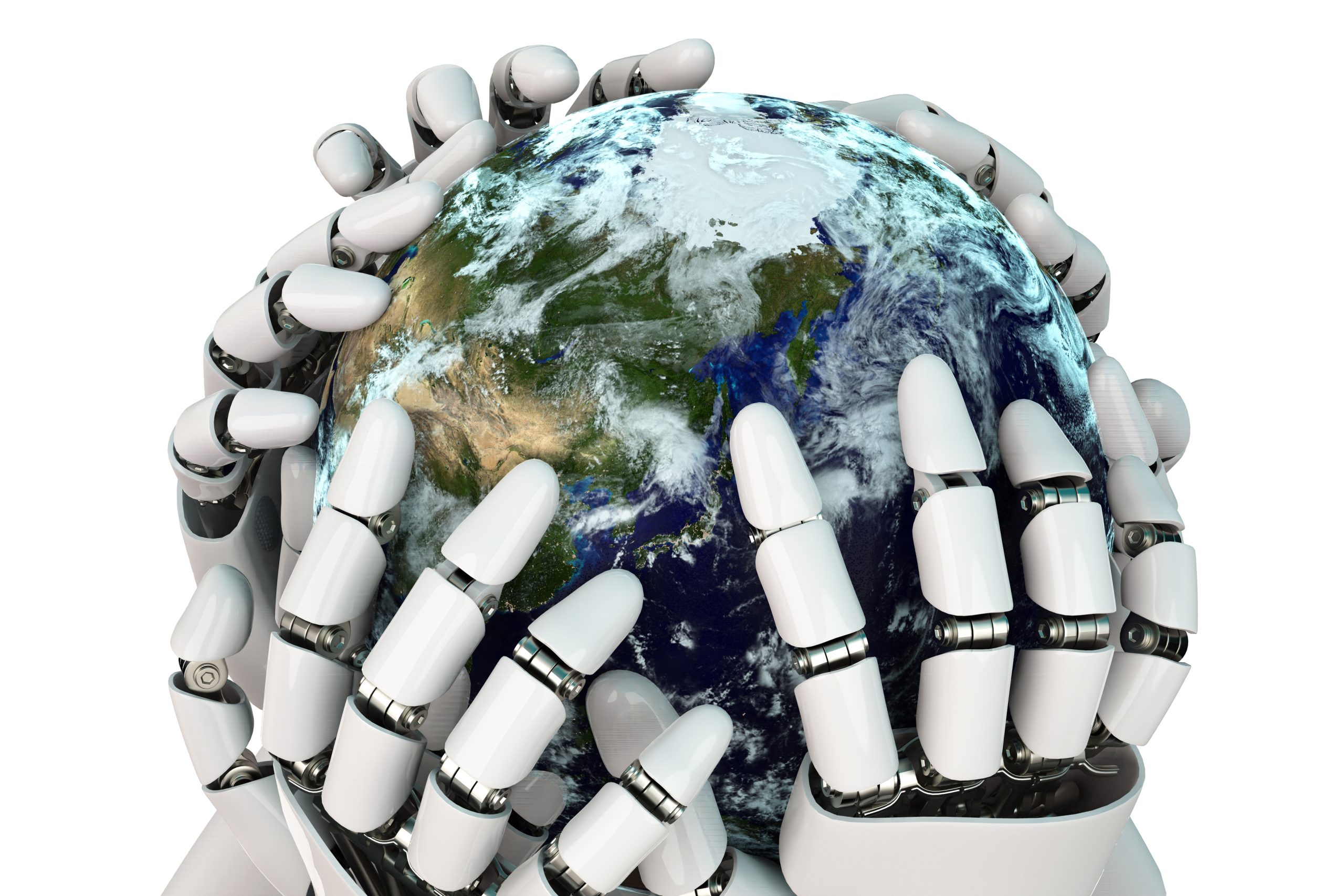
While many conversations about AI are framed in terms of innovation and efficiency, these will mean little if the outputs fail to accurately represent local realities. Many of the large language models (LLMs) in today’s AI ecosystem are trained and built on English, making it essential for countries in the Global South to power their own AI development and invest in AI systems that reflect their own contexts and priorities. Local examples of such initiatives include Bhashini, backed by the Indian government’s IndiaAI Mission, and Sarvam AI’s OpenHathi, which is India’s first Hindi LLM.
While many conversations about AI are framed in terms of innovation and efficiency, these will mean little if the outputs fail to accurately represent local realities.
As Sreevas Sahasranamam opines in his piece for the World Economic Forum, AI initiatives need to be ‘grounded in cultural context, digital infrastructure and inclusive innovation’. To achieve this, he advocates decolonising AI through local language-led AI initiatives, incorporating insights from local philosophical traditions and community governance models and building robust digital public infrastructure.
Realising this broader vision will entirely depend on how institutions translate these principles into practice. As organisations and think tanks that produce knowledge and inform public decision-making increasingly integrate AI into research, data analysis, and communication, they have a critical responsibility to ensure that these systems are not only technically effective but also transparent, accountable, and contextually grounded. Doing so requires addressing AI deception as a technological problem as well as a challenge of governance, communication, and public trust.

According to a recent study ‘Who uses AI in research, and for what? Large-scale survey evidence from Germany’, researchers reported active use of AI tools, with AI acting as a co-creator, not a mere assistant. Of the 6,215 surveyed researchers, 42.4% reported being very or rather familiar with AI tools, and a further 44.0% reported having used AI tools a few times.
In the think tank space, to better understand how AI is being used in the Indian context, we spoke to researchers at CSTEP about their approach to and concerns regarding the use of such tools.
‘While it is useful for improving or correcting codes of our data analysis pipelines, AI shouldn’t be used as a first point of reference for building such frameworks’, noted Dr Piyush Bhardwaj (Group Head, Air Quality Modelling and Air Quality Observations, CSTEP).
If AI introduces inaccuracies or biases during the research stage, it could lead to communicating an idea that is fundamentally built on falsehoods. Spurthi Ravuri (Group Head, Green Mobility, CSTEP) noted that ‘One’s rigour is essential to producing valuable and relevant research. AI may be a good platform to collate various sources of information, but it is on us to responsibly collect the data from the sources and to go back and verify the AI-generated data’.
Highlighting the impact on the institutional voice, Sreerekha Pillai (Head, Communications and Policy Engagement, CSTEP) noted that ‘An authentic voice is what distinguishes an individual’s work and an organisation’s identity. Overdependence on AI risks diluting that voice that gives communication its meaning and credibility’.
While researchers and communicators alike tend to rely on AI tools to collate information, these responses highlight the importance of using them thoughtfully and leveraging their strengths while remaining mindful of their limitations.
In many ways, the incident involving Sir Attenborough is symbolic of the moment we find ourselves in. For nations of the Global South, building AI on local foundations isn’t optional; it’s essential to preserving cultural identity and protecting citizens from algorithmic harm.

For nations of the Global South, building AI on local foundations isn’t optional; it’s essential to preserving cultural identity and protecting citizens from algorithmic harm.
With AI becoming critical to processes that shape research, communication, and public policy, the challenge of preserving authenticity, validity, and trust increases. As trusted producers of policy-relevant evidence, think tanks have a responsibility to deploy AI in ways that enhance analytical rigour, preserve human judgement, and reinforce public trust.
AI must, therefore, be treated as a tool to augment—not replace—human expertise.
To read more about the various kinds of AI Deception and the institutional ways to combat it, read the article by our Executive Director, Jai Asundi, published by Southern Voice.

In our previous blog in the Measuring the Microns series, we briefly...

In this blog series titled Measuring the Microns, we examine why greater...
India’s transition to a cleaner power system has moved from a supply...

In the first blog in ‘The AI shift’ series, we examined what...
With growing electricity demand, renewable energy penetration, and storage requirements, Indian distribution...
In the first blog in ‘The AI shift’ series, we looked into...