
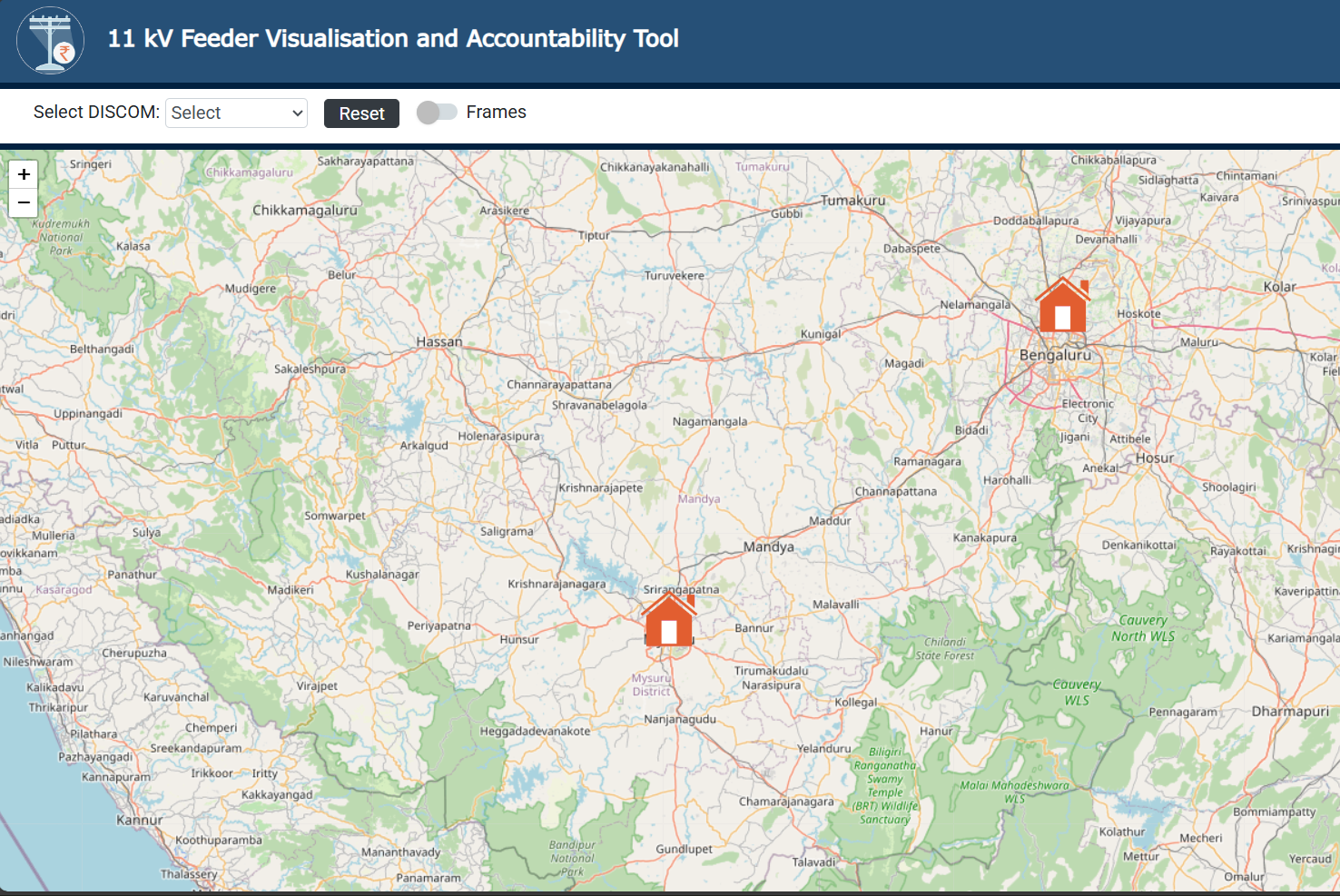
Feeder-wise Revenue Analysis and Monitoring of Energy Sales (FRAMES) is a GIS-based energy audit and decision-making tool for corporate-level officials to improve the financial health of the DISCOM.
Tool Year: 2018
E-Bus Depot Electrification Planning And Operational Tool (E-DEPOT)

E-Bus Depot Electrification Planning And Operational Tool (E-DEPOT) was developed to support state transport undertakings (STUs) and electricity distribution companies (DISCOMs) in their plans to deploy e-buses across different cities.
CREST Bengaluru
CSTEP’s Rooftop Evaluation for Solar Tool (CREST) accurately assesses the solar potential of rooftops in cities using LiDAR technology.
CSTEP’s Solar Techno-Economic Model (CSTEM)

CSTEP’s Solar Techno-Economic Model (CSTEM) for photovoltaics is a web-based platform designed to serve as a useful tool for prefeasibility analysis of utility-scale solar photovoltaic plants from a techno-economic standpoint. It is aimed to cater to policymakers, researchers, and industry trackers for informed decision-making.
Solar Technology and Application Atlas for India (STAAI)

Solar Technology and Application Atlas for India (STAAI) is a GIS-based online portal that provides detailed information and results from the technical studies conducted for the seven new and innovative solar applications (NISAs) in India, including the technical potential in terms of feasible installation capacity and levelised cost of energy for independent or all NISAs on the GIS map of India.
Bihar Power Transmission Visualisation Portal
Bihar Power Transmission Visualisation Portal is an online GIS tool that allows users to conduct scenario analysis to ascertain various load and demand conditions created within the system.
SAFARI
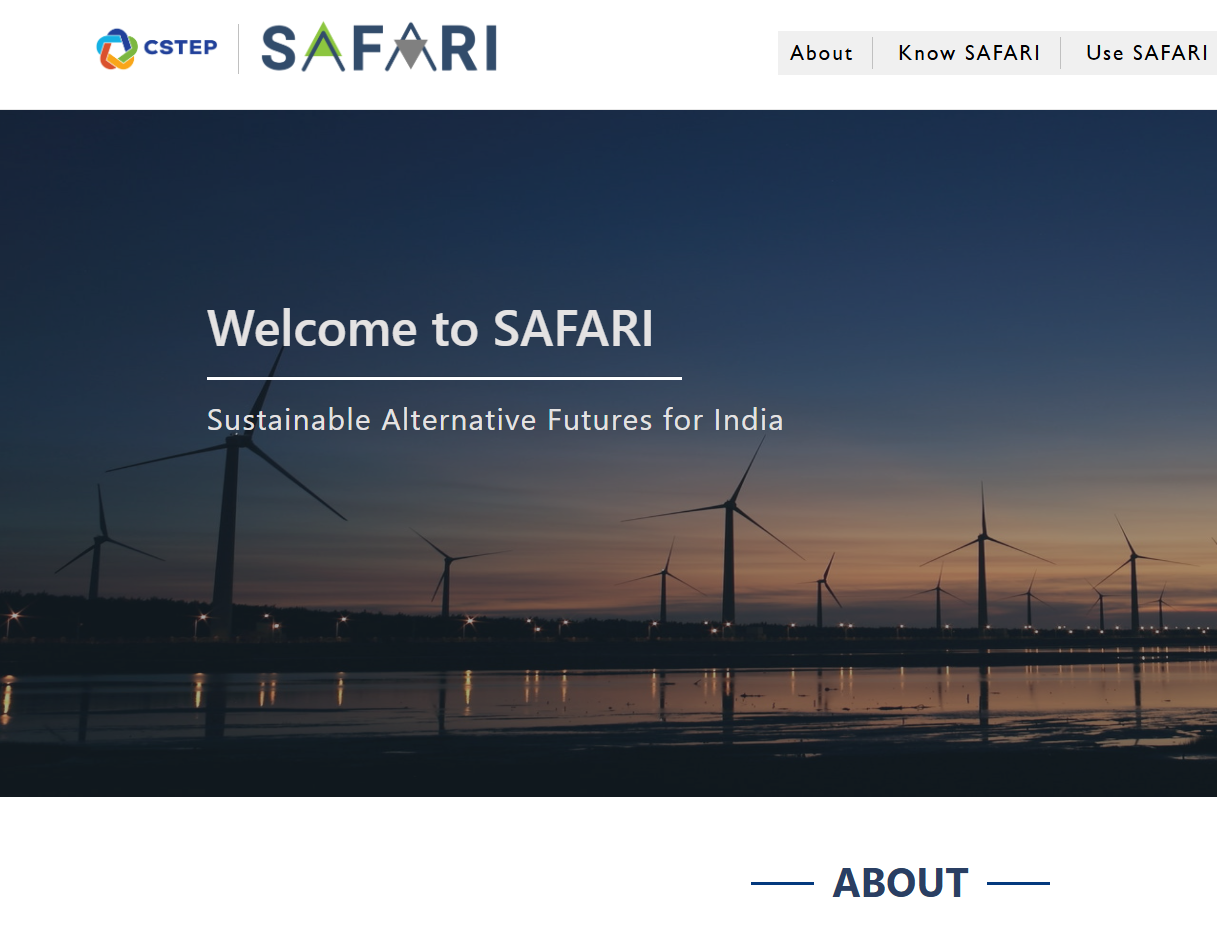
SAFARI estimates the energy, emissions, and resources implications of achieving developmental goals such as food, housing, healthcare, education, power for all, and transport up to 2050. The main objective of this project is to develop an energy model as a visualisation and planning tool (decision-support system) that will enable policymakers to create and test their strategies virtually. The purpose of the energy model is to estimate the materials, energy, and emissions implications for India to achieve a desired quality of life for all to ultimately understand the synergies and trade-offs involved in balancing developmental goals and climate targets.
CSTEPs Emission Inventory for 76 Cities
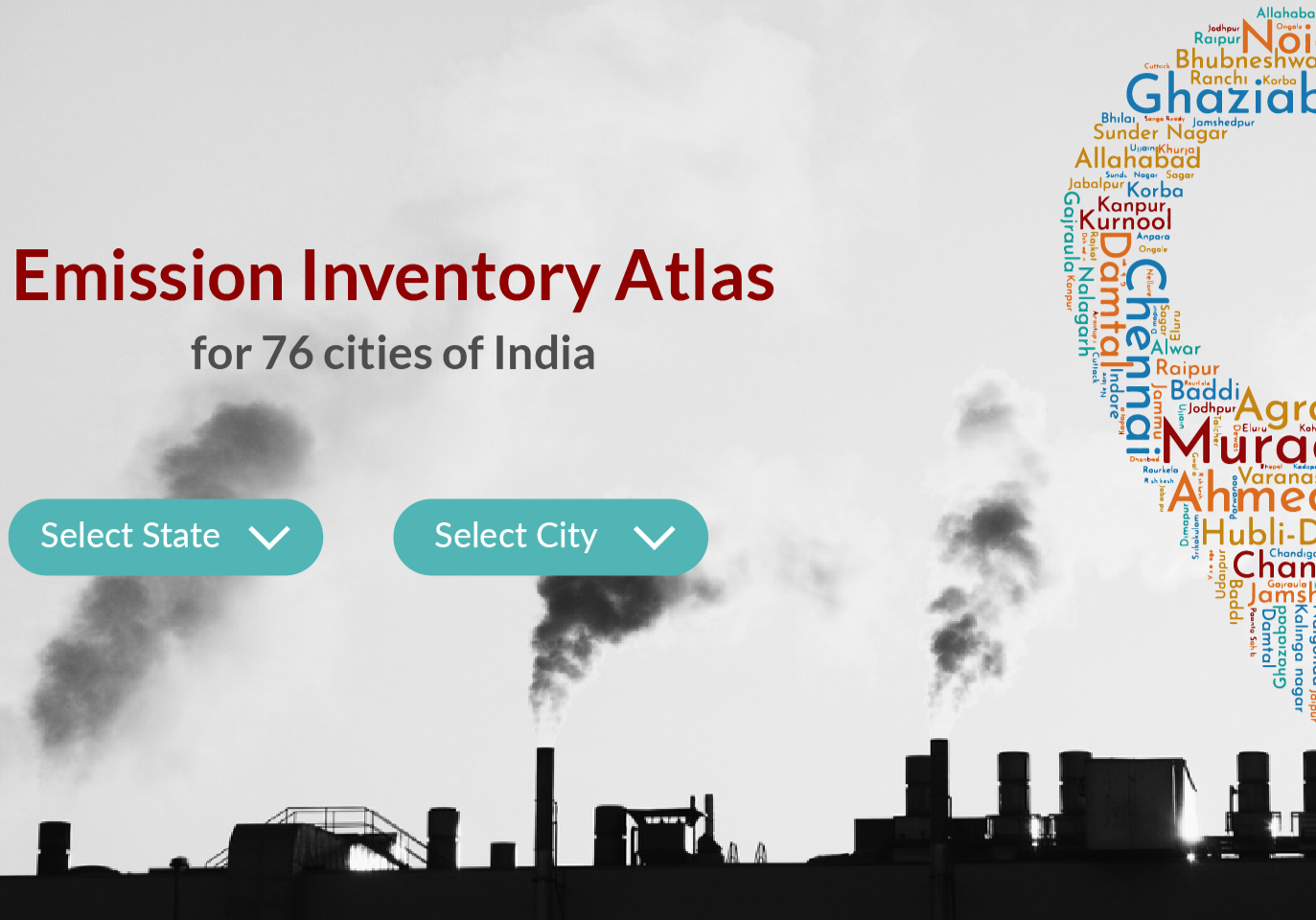
CSTEP, with assistance from 12 other Institutes of Repute (IoRs), developed the Emission Inventories (EIs) for 76 non-attainment cities under the aegis of the National Knowledge Network (NKN) to understand the various polluting sectors of the city and their share in the pollution.