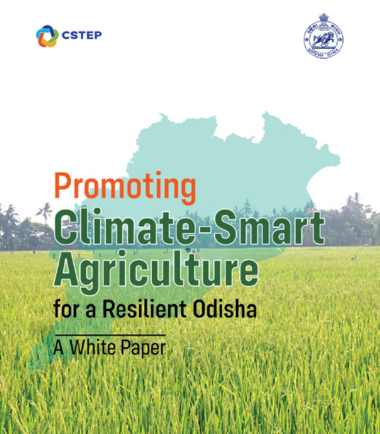
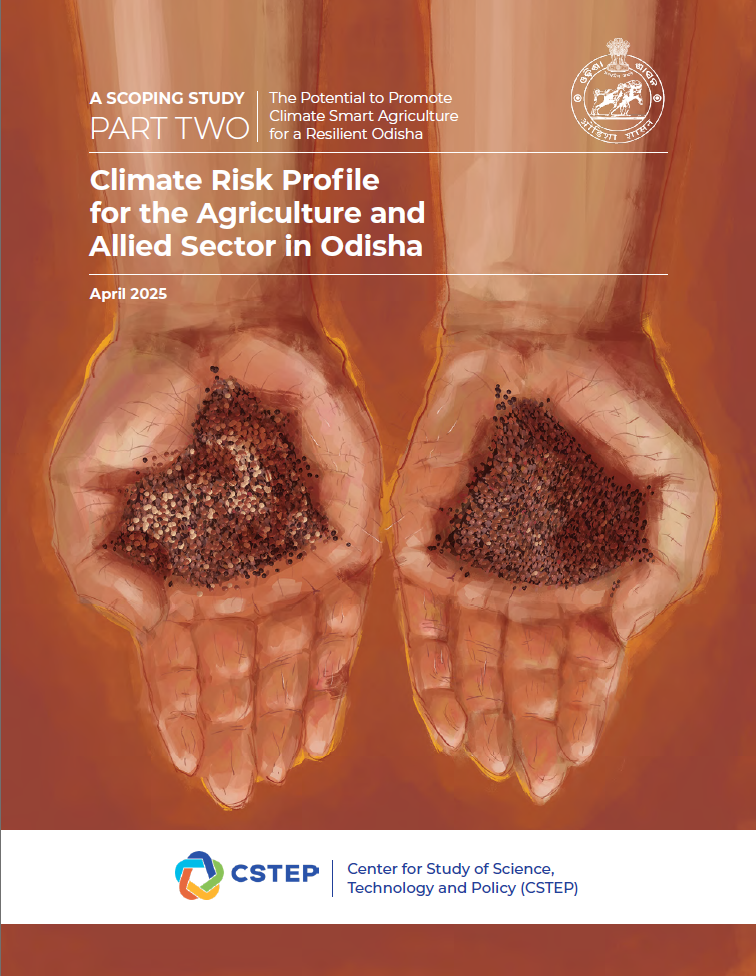
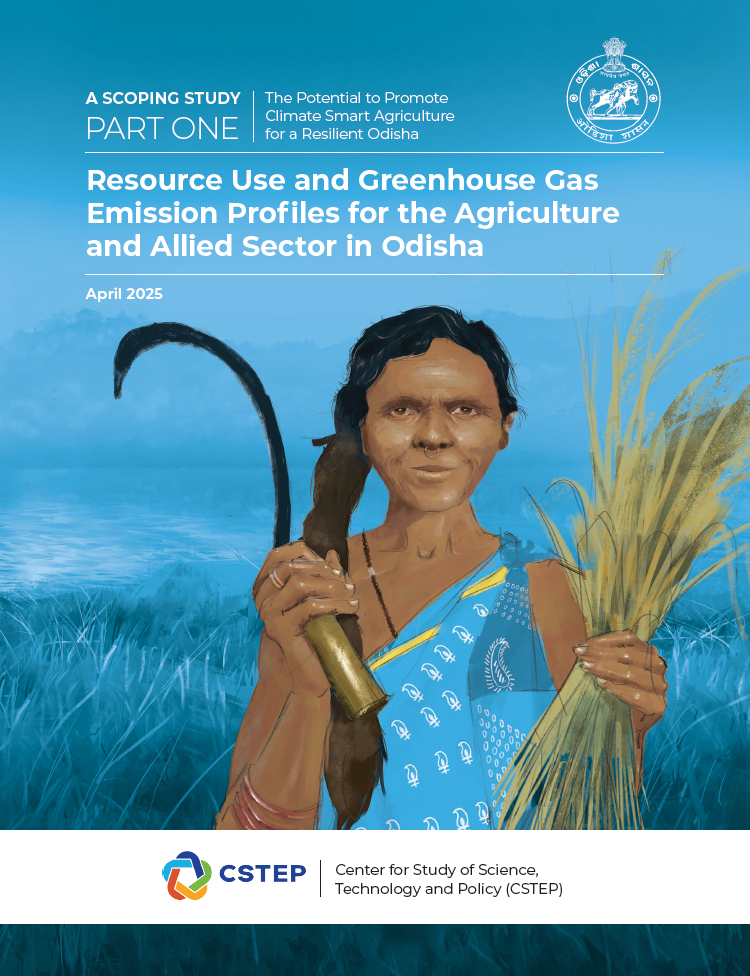
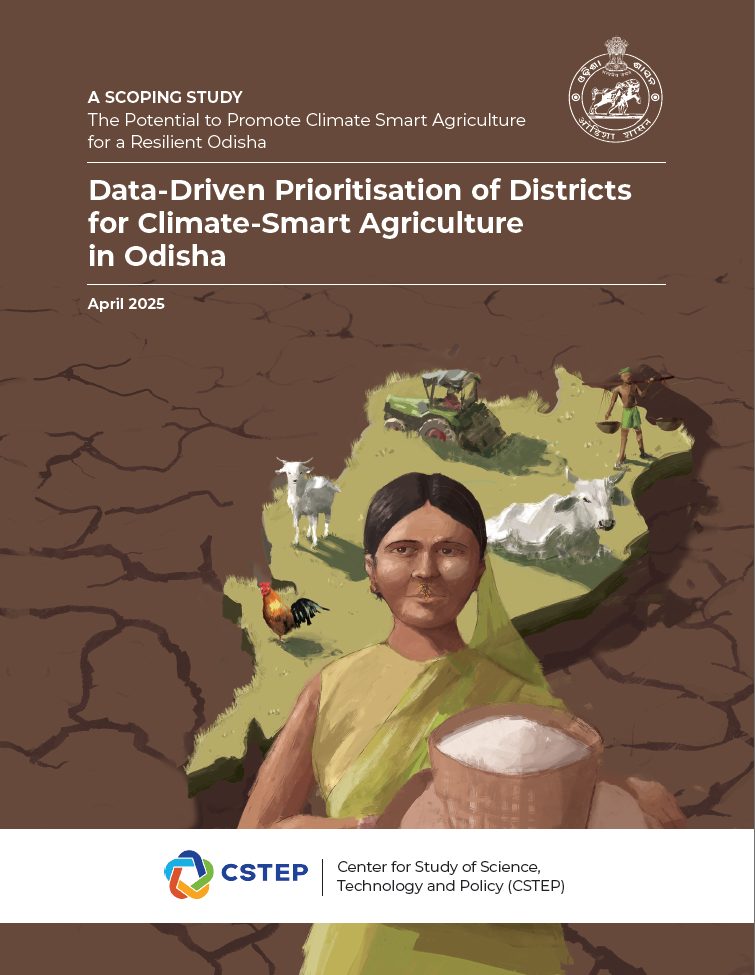
Promoting Climate-Smart Agriculture for a Resilient Odisha
Overview
The Centre for the Study of Science, Technology and Policy (CSTEP), in collaboration with the Department of Agriculture and Farmers’ Empowerment (DA&FE), Government of Odisha, is implementing a three-year project (2023-2026) funded by the Gates Foundation to enhance climate resilience in agriculture and allied sectors. The initiative aims to promote Climate-Smart Agriculture (CSA) and Climate-Resilient Agriculture (CRA), build institutional capacity to address climate risks from droughts, floods, heatwaves, and cyclones, and improve farm productivity, resource efficiency, and farmers’ livelihoods.
Key Objectives
The key objectives of this project include;
Enhance farm productivity, improve resource use efficiency, and reduce GHG emissions through CSA interventions.
Integrate CSA insights into District Action Plans (DAPs) and state policies for Odisha.
Capacity building and training of farmers and government functionaries on climate resilience, adaptation, and mitigation.
Key Activities
Scoping Study & Risk Profiling: Identify high-risk districts based on climate hazards, GHG emissions, and resource use.
CSA Practice Repository – Document global and region-specific CSA best practices to inform interventions.
Life Cycle Assessment (LCA) – Analyze the environmental impact of CSA practices to ensure sustainability and optimize resource use.
Policy Engagement & Knowledge Exchange – Develop crop-specific CSA recommendations that consider climate risks and integrate project insights into existing knowledge platforms. Build a CSA Alliance of interested stakeholders working on Climate Resilient Agriculture in Odisha to foster collaboration.
District Action Plans (DAPs) & Pilots – Design targeted CSA pilots, leverage the CSA Alliance for implementation, and integrate climate finance mechanisms for sustainability.
Monitoring, Evaluation & Learning (MEL) – Track CSA progress, measure impact, and refine strategies for scaling successful interventions.
Capacity Building & Training – Conduct state- and district-level workshops for government functionaries and farmers on climate science and resilience strategies.
Main Outcomes
The expected outcomes from this project are listed below.
Climate-smart policies and district-level strategies for resilient agriculture.
Stronger institutional capacity for climate action.
Increased adoption of CSA practices reduces climate risks to extreme climate events.
Enhanced climate finance opportunities to scale CSA interventions.
This initiative aims to position Odisha as a leader in climate-resilient agriculture, ensuring sustainable farming systems, food security, and improved livelihoods for farmers
Summary Video
Directory: Mapping the Organisational Ecosystem for Climate-Smart Agriculture
The Promoting Climate-Smart Agriculture for a Resilient Odisha project builds on this imperative by identifying, promoting, and scaling context-appropriate CSA practices. As part of this effort, the Center for Study of Science, Technology and Policy (CSTEP) undertook a mapping exercise to identify key organisations engaged in CSA globally, nationally, and in Odisha. This is not an exhaustive review but is an initial step to support strategic planning and partnership development
for scaling CSA interventions in Odisha and across India. The analysis presents descriptive insights based on a dataset of organisations identified through CSA-related keyword searches. It does not aim to infer broader sectoral trends, but rather summarises priorities, geographies, and organisation types within this sample to inform future engagement.