
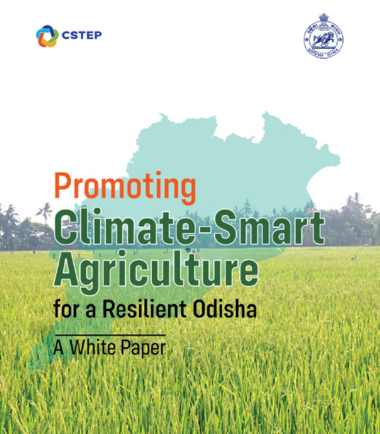
Odisha has taken major steps in climate-resilient agriculture by shifting from disaster response to data-driven agricultural planning. Facing increasing cyclones, floods, droughts, and heatwaves, along with a predominantly rainfed farming system and a large population of smallholder farmers, the state is strengthening resilience through state-led initiatives, policies, and institutional reforms. Yet there is a need to further optimise inter-agency coordination, expand access to irrigation infrastructure, and deepen inclusive support systems for women and tenant farmers.
The white paper examines how Odisha is building agricultural resilience across three interconnected dimensions
The white paper identifies four strategic priorities for strengthening agricultural resilience.
Enhancing water resilience through decentralised irrigation: The paper highlights the importance of expanding localised water conservation and irrigation systems. Existing initiatives can provide scalable models for climate adaptation. Additional priorities include village-level water budgeting, micro-irrigation expansion in drought-prone regions, and sustainable use of surface and groundwater resources.
Strengthening climate-resilient cropping system: The white paper emphasises the need for diversified and resilient farming systems aligned with Odisha’s agroclimatic zones. Community-led seed systems, soil health services, and integrated farming systems are also identified as critical tools.
Bridging agricultural gaps through digital and peer networks: The paper recommends strengthening farmer access to digital climate advisories, expanding decentralised post-harvest infrastructure through self-help groups and farmer producer organisations, and promoting peer-to-peer learning networks to improve last-mile outreach.
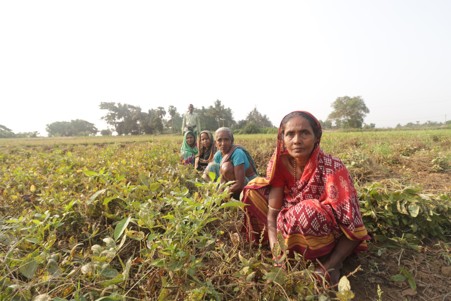
Building stronger institutional and market linkages via the Odisha Climate-Smart Agriculture Alliance (OCSAA): To close critical gaps in knowledge flows, OCSAA aims to strengthen coordination between government agencies, research institutions, financial systems, and farmer organisations. Key recommendations to strengthen credit delivery and close gaps in risk transfer include reinforcing risk-managed decision-making and expanding access to credit and insurance for tenant farmers, women farmers, and smallholders.
Nagendra Kumar Mallik (CRC) also co-authored the paper.
More about publication |
|
|---|---|
| Date | 9 June 2026 |
| Type | White Papers |
| Contributors | |
| Publisher | CSTEP |
| Related areas | |
| Related project | |
| Pages | 36 |
| Copyright | CSTEP |
Get in touch with us at
cpe@cstep.in