
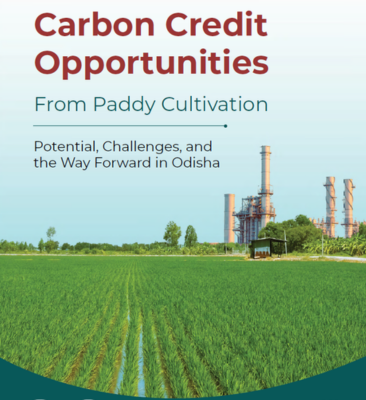
Agriculture supports 54% of India’s population and contributes nearly 13% of national greenhouse gas emissions. Paddy cultivation is a major source of these emissions, as flooded fields release substantial methane.
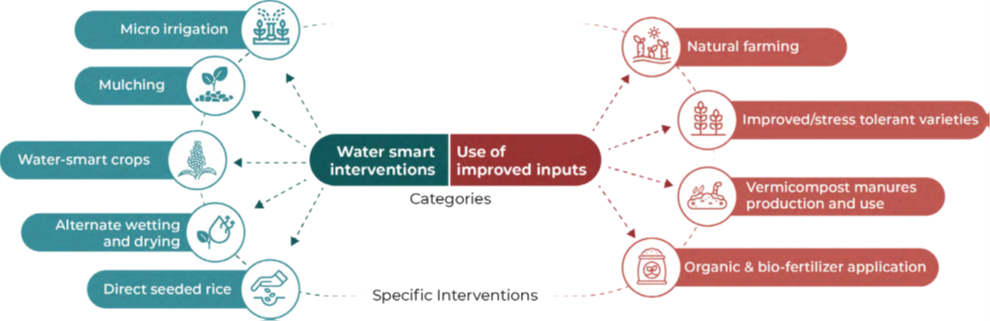
In Odisha, where paddy covers 64% of the kharif cultivated area and 14% of the rabi cultivated area, transitioning to climate smart agriculture (CSA) practices offers both environmental and economic benefits for farmers.
Fragmented landholdings
Small and marginal farmers often cultivate parcels that are too small to generate viable carbon credits. Aggregation through farmer producer organisations is therefore essential.
Monitoring, reporting, and verification costs and gaps
Current carbon accounting methodologies largely capture field-level emissions for paddy cultivation. Off field sources, such as irrigation, fertilisers, seed production and other agricultural inputs, are not fully accounted for. Low-cost digital monitoring, reporting, and verification (MRV) systems will be critical.
Market and pricing risks
Agricultural carbon projects in India can primarily participate in voluntary carbon markets under Verra’s Verified Carbon Standard and Gold Standard for the Global Goals. Compliance markets have limited scope in agriculture due to MRV constraints. Fair carbon pricing will be key to ensuring that farmers receive equitable returns.
Odisha has an opportunity to become an early mover in linking climate-smart paddy cultivation with carbon markets. A practical pathway would combine FPO based aggregation, digital MRV infrastructure, and state-level institutional facilitation.
This approach can help place low-carbon paddy cultivation within Odisha’s broader climate resilience strategy and the State Action Plan on Climate Change, while also aligning with emerging national frameworks such as the Green Credit Programme and the Carbon Credit Trading Scheme.
Deeksha Shridhar (Former Senior Analyst at CSTEP) co-authored the report.
More about publication |
|
|---|---|
| Date | 30 June 2026 |
| Type | Reports |
| Contributors | |
| Publisher | CSTEP |
| Related areas | |
Get in touch with us at
cpe@cstep.in