


The subsidy to the agricultural sector in Karnataka has seen a whopping increase of 86% — from INR 4,993 crore in FY13 to INR 9,295 crore in FY18–in just five years. A large portion of this subsidy can be saved by the government by merely mapping the already segregated agricultural feeders with associated distribution transformers and irrigation pump (IP) sets. Mapping will help the distribution company (DISCOM) assess the actual number of active IP sets drawing power, resulting in a better estimate of electricity consumed by them.
This could help the state save around INR 550 crore subsidy/year, even ifit keeps on supplying free powerto the agricultural sector.
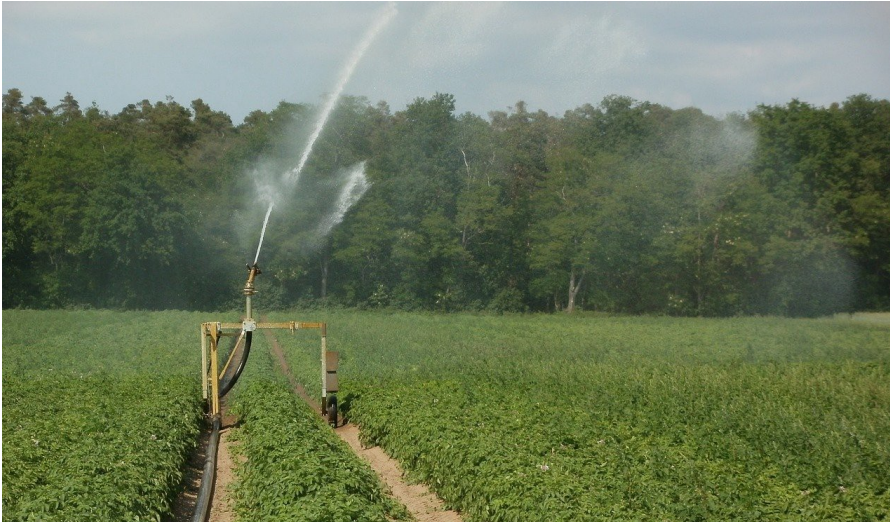
DISCOMs calculate the subsidy based on the estimated agricultural consumption in the state. Largely unmetered supply leads to rough estimates of electricity consumption in almost all the states, resulting in over estimation of subsidy requirements.
In 2018–19, the agricultural sector in India accounted for 17.69% of the total energy consumption, recorded as the highest by agriculture around the world. The agricultural sector in India is supplied energy either absolutely free or at a nominal rate. While states like Karnataka and Telangana provide free power to the farmers, Maharashtra and Andhra Pradesh supply power at subsidised rates. The state governments transfer the subsidy to the DISCOMs for the costs incurred by them while providing free or subsidised energy to the agriculture sector. Since the power supply to the sector is mostly unmetered, DISCOMs claim subsidy from the government based on a rough estimate of the amount of energy consumed by agriculture. Further, unmetered IP sets have undermined energy accounting in DISCOMs, impairing their internal accountability systems.
In 2008–09, government launched feeder segregation scheme — separating feeders supplying agricultural loads from those supplying non-agricultural loads — for a better estimation of power consumed by the agricultural sector. As non-agricultural loads are metered under the scheme, the consumption non accounted for, is considered to be agricultural consumption. As of now, just a few states such as Gujarat, Karnataka, Punjab, and Andhra Pradesh have successfully completed the scheme. Despite this, subsidy requirements of the agricultural sector are increasing annually. The increasing subsidy burden is not sustainable in the long run for the state governments. In this context, it is essential to devise a methodology to compute the accurate consumption of the agricultural sector.
To demonstrate the methodology for an accurate calculation of electricity consumption (by the agricultural feeders), CSTEP conducted the survey for one agricultural feeder in Karnataka. The team geo-located — identified the exact geographic location — all the distribution transformers and IP sets connected to the feeder, besides identifying active and inactive IP sets. Further, the feeder network was modelled and simulated in a load-flow software to calculate the technical losses occurring in the feeder. A lower loss translates into higher consumption of electricity, and subsequently higher subsidy claims.
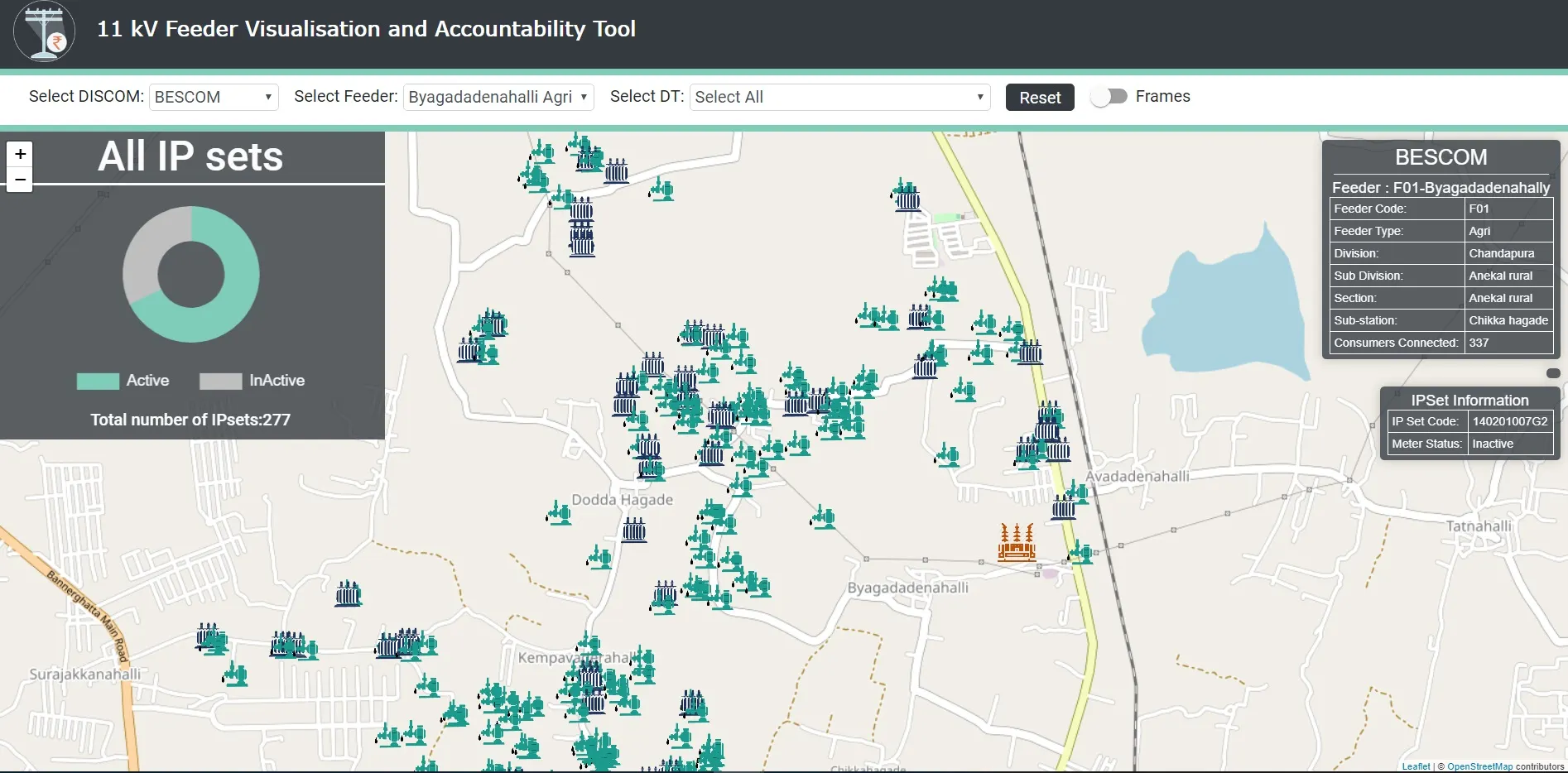
While CSTEP’s load-flow analysis of the feeder showed losses of 15% (consumption of 2,00,583 units), DISCOMs assumed a normative loss of 10 (consumption of 2,11,400 units). The subsidy claim (at commission determined subsidy rate of INR 3.94/unit) for the feeder is INR 832,595 and INR 782,274 as per DISCOM and CSTEP calculations, respectively. CSTEP’s subsidy claim amount is lower by INR 50,321 from DISCOM’s subsidy claim amount, for the feeder with 277 IP sets. This would result in savings of INR 182/IP set. If this saving is applied to the existing 25 lakh IP sets in Karnataka, it would result in an annual subsidy saving of INR 546 crores.
Accurate measurement of agricultural electricity consumption can serve twin purposes. These include reduction in government subsidy expenditure, and effective implementation of Ministry of New and Renewable Energy’s (MNRE) “Pradhan Mantri Kisan Urja Suraksha evem Utthan Mahabhiyan” (PM KUSUM) scheme — intended to improve the quality of power supply to farmers by energising the irrigation pump sets with solar power.
With inputs from Mallik EV and Hanumanth Raju GV ((Research Associates)
In our previous blog in the Measuring the Microns series, we briefly...

In this blog series titled Measuring the Microns, we examine why greater...
India’s transition to a cleaner power system has moved from a supply...

In the first blog in ‘The AI shift’ series, we examined what...
With growing electricity demand, renewable energy penetration, and storage requirements, Indian distribution...

In the first blog in ‘The AI shift’ series, we looked into...