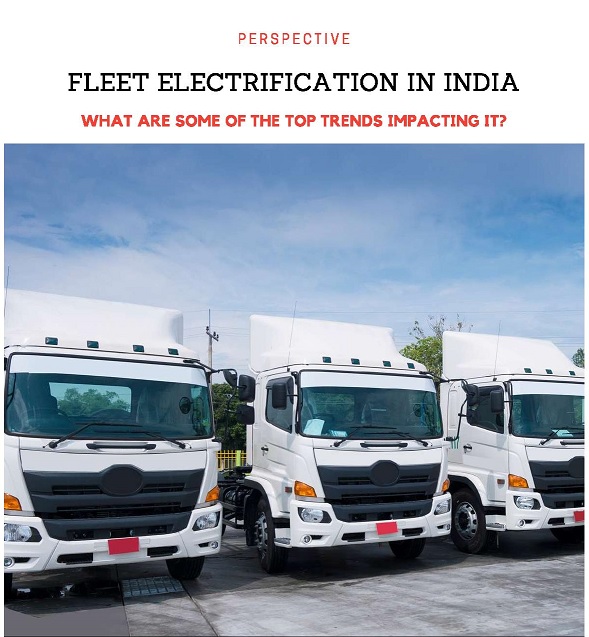


Freight transport in India, currently dominated by diesel-powered trucks, makes up less than 5% of the vehicles but generate nearly half the transport sector’s GHG emissions. With the freight demand expected to increase four-fold by 2050, decarbonising this sector becomes essential for meeting national climate goals. While India is making progress towards electrifying the freight sector through government initiatives and private sector investments, several challenges hinder large scale adoption.
A key barrier is the absence of dedicated and reliable charging infrastructure freight vehicles that require higher powered chargers, longer charging durations, and larger parking area. Limited power availability along highways further adds to uncertainty in energy availability and reliability.
As e-truck adoption scales up, the power and energy demand will require grid strengthening and renewable energy integration. Strategically developing a robust and renewable-powered charging ecosystem for e-trucks will be critical for India’s freight decarbonisation strategy.
CSTEP’s initiative aims to develop proof-of-concepts, with transport and energy stakeholders, to co-develop the energy and charging infrastructure for e-trucks along major highways.
A Dialogue on Advancing Electric Vehicle Adoption in India’s Road Freight Sector