

Across India, air quality is assessed using a combination of continuous ambient air quality monitoring stations (CAAQMS) and conventional monitoring stations established under the National Air Quality Monitoring Programme (NAMP). While reliable, these fixed, ground-based stations are resource- and labour-intensive to install, operate, and maintain. Further, their large-scale deployment is constrained by limited spatial coverage, high upfront and operating costs, and stringent requirements for a controlled environment. As a result, most emission hotspots are poorly monitored, leaving critical gaps in air quality assessment across urban, rural, and industrial areas.
In recent years, the existing monitoring methods have been supplemented with a network of multiple low-cost sensors (LCSs). But several concerns surrounding data quality, long-term stability, and environmental sensitivity limit LCS deployment. Responses from LCSs can deviate substantially from true concentrations depending on the local aerosol characteristics, temperature, humidity, and wind speed. Thus, calibration of LCSs against a reference instrument is important for deriving a site-specific correction factor to convert sensor responses to reference-equivalent measurements.
Further, given India’s distinct climatic conditions and a varying spatially distributed population, land-use and land-cover patterns, and levels of emissions from multiple sources, there is an urgent need for a systematic, transparent, repeatable, and independent sensor evaluation ecosystem in the country. Recognising this, the Center for Study of Science, Technology and Policy (CSTEP) established a first-of-its-kind facility in the country—the India Sensor Evaluation and Training (Indi-SET) facility—in December 2023.
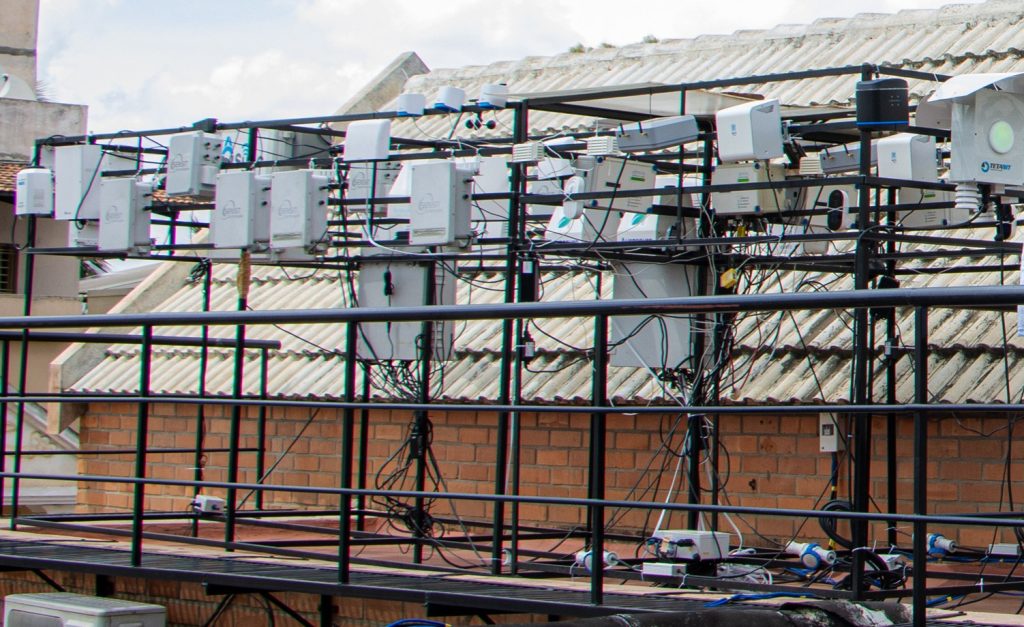
Indi-SET is an indigenous facility designed in accordance with international standards for scientific and independent testing, calibration, and training for LCS technologies. CSTEP has developed the necessary architecture, framework, and capacity to evaluate multiple outdoor air sensors in a structured manner.
Indi-SET (Bengaluru) is equipped with a real-time air quality monitoring station (AQMS) comprising various reference-grade instruments for monitoring key air pollutants, including particulate matter (PM2.5 and PM10), ozone (O3), carbon monoxide (CO), and nitrogen dioxide (NO2), as well as an automatic weather station. The real-time measurements of aerosol chemical and elemental composition are conducted at Indi-SET, using an Aerodyne Time-of-Flight Aerosol Chemical Speciation Monitor (ToF-ACSM), an aethalometer (Magee Scientific AE33), and an Xact 625i Ambient Continuous Multi-Metals Monitor. In addition, the real-time aerosol number-size distribution spanning 4 nm to 29.4 µm is measured using a combination of aerosol spectrometers such as a Scanning Mobility Particle Sizer (SMPS), a PALAS-FIDAS 200 S, and a GRIMM-EDM 280. The facility also has a PM sequential sampler (Met One Super SASS) for filter-based monitoring.
Indi-SET began by evaluating sensors from six manufacturers over 1 year, revealing notable results. It was observed that manufacturer-reported values were less accurate than those from the reference measurements. However, applying a localised calibration model improved LCS performance, particularly for gas sensors. This finding helped the manufacturers to improve their sensor performance by enhancing the existing sensor configurations and calibration models.
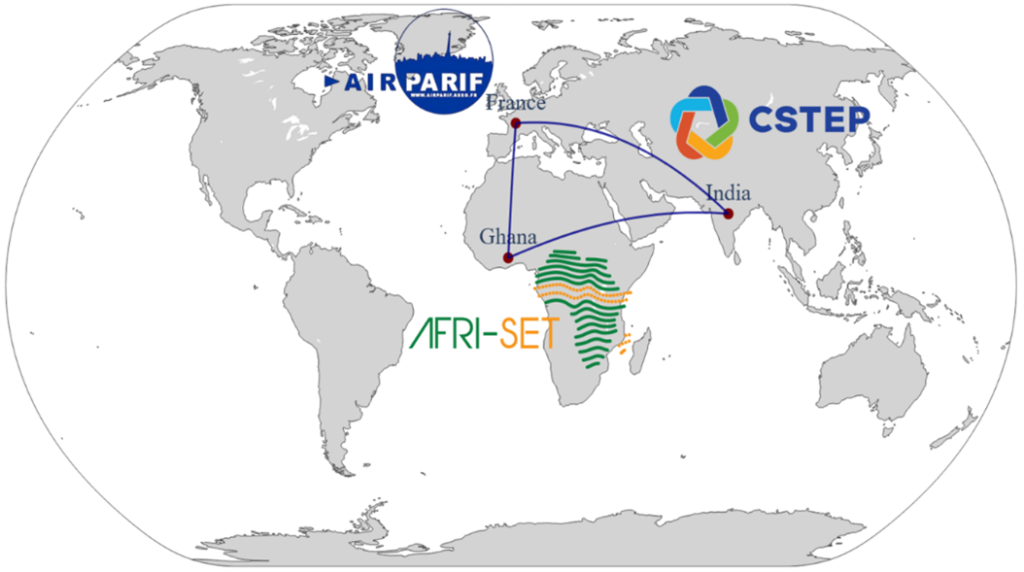
The success of Indi-SET has positioned CSTEP as a credible scientific partner for the fifth edition of the AIRLAB Microsensor Challenge (AMC), alongside Airparif (France) and Afri-SET (Ghana). AMC has established a globally accepted standardised framework for evaluating air quality sensors, with a mission to increase citizens’ awareness and monitoring capacity at a low cost. Established in 2017 by Airparif, the first edition of AMC was launched in 2018 alongside nine partners. Driven by a positive response and increased global interest in LCS validations, Airparif continued leading the challenge in 2019, 2021, and 2023, with each year seeing a clear trend of a greater number of participants. The 2025 edition focused on a simultaneous, multi-season evaluation of air quality sensors against reference-grade instruments. Beyond technical performance, this edition examines how practical the sensors are to use, carry, and afford in real-world conditions.
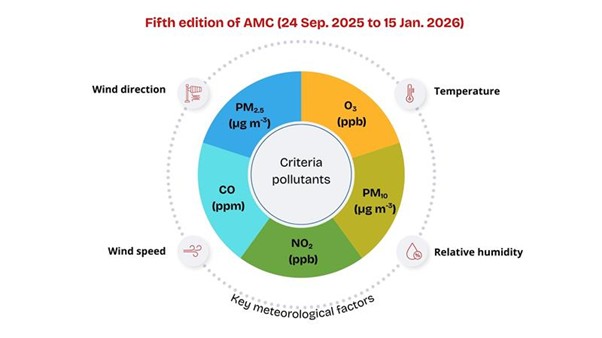
Given the unique climatic conditions of India, CSTEP Bengaluru has received interest from 18 manufacturers from 11 countries across the world. CSTEP’s evaluation focuses on five criteria pollutants (PM10, PM2.5, CO, NO2, and O3), along with key prevailing weather parameters such as relative humidity, wind speed, temperature, and wind direction. Upon completion, this independent and comprehensive assessment is expected to yield critical insights into sensor performance under varied environmental conditions. These findings will provide valuable guidance to sensor manufacturers, educational institutions, regulatory bodies, and the general public in selecting the most appropriate air quality sensor for specific deployment needs.
Stay tuned for updates as we move forward with this exciting initiative!
More About Publication |
|
|---|---|
| Date | 24 February 2026 |
| Contributors | |
| Related Areas | |
Get in touch with us at
cpe@cstep.in