


Bengaluru, India’s ‘Garden City’, is facing a growing dilemma. The once green streets now suffer from thick air laden with exhaust fumes and traffic congestion, affecting commuters’ health and testing their patience. The previous articles in this series explained the impact of vehicular exhaust emissions on citizen health and the need for integrated planning to promote sustainable mobility. This article focuses on the potential of active mobility to tackle pollution and congestion in Bengaluru.
Focussing on the issue and solution at hand
Owing to the growing vehicle stock, the average vehicular speed in the city has plummeted to a mere 18 kmph, leading to a significant loss in productivity and fuel wastage. As per the Bengaluru Master Plan (2031), 1.18 crore citizens lose 60 crore person-hours annually due to congestion, resulting in the squandering of almost 2.8 lakh litres of fuel per hour.
Non-motorised transport (NMT) or active mobility can be beneficial in alleviating traffic congestion and lowering air pollution in Bengaluru. Particularly, cycling and walking are sustainable transportation modes that offer benefits such as reduced reliance on fossil fuels, zero emissions, health improvements through increased physical activity, and affordability for low-income households.
Lessons from global examples
Given Bengaluru’s favourable climate and topography, there is a tremendous scope to learn from international counterparts and create NMT-friendly streets. Consider cities like Oslo or Amsterdam, which stand out as prime examples of vibrant mobility. These urban centres proudly showcase a substantial modal share for active mobility of approximately 50%, a testament to the well-designed infrastructure and safety measures prioritised for their residents.
Studies link active mobility to improved mental and physical health as well as increased longevity. Ditching just 32% of car trips in Europe could yield an impressive annual savings in fuel costs of EUR 28 billion (~INR 252 crore), according to a study by the European Cyclists’ Federation.
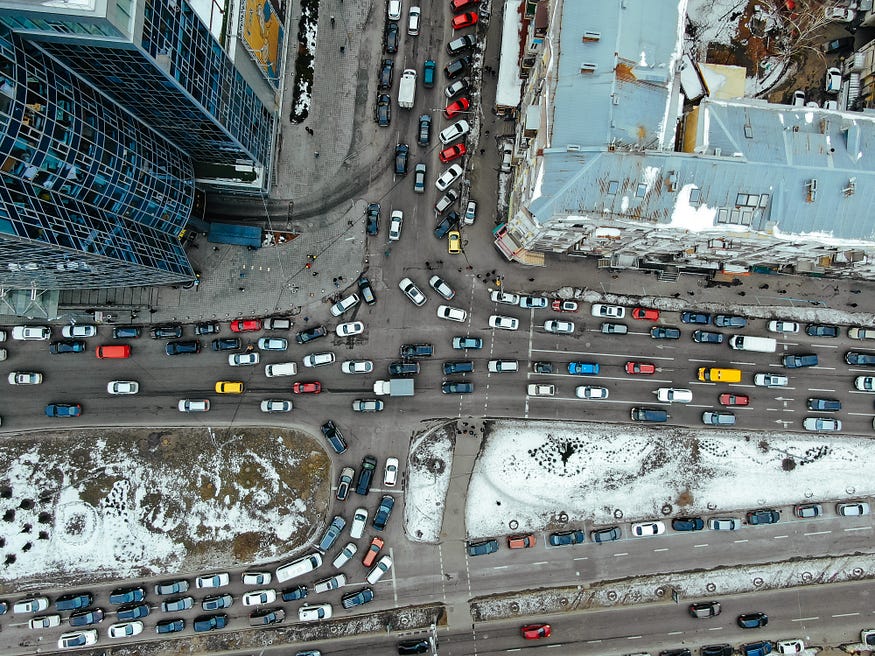
The final article in this series will focus on the implementation of Electric Mobility as a Service (eMaaS) to overcome the traffic bottlenecks in Bengaluru.
India’s transition to a cleaner power system has moved from a supply...

In the first blog in ‘The AI shift’ series, we examined what...
With growing electricity demand, renewable energy penetration, and storage requirements, Indian distribution...

In the first blog in ‘The AI shift’ series, we looked into...
Following our photo essay from the field, this blog looks at the...

In this three-part blog series titled ‘The AI shift’, I examine how...