


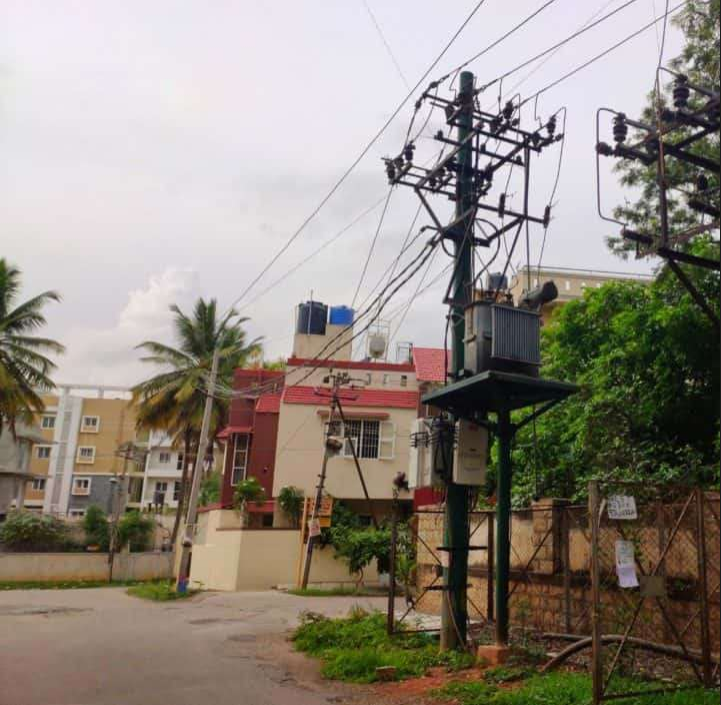
Bengalureans are familiar with frequent power cuts lasting several hours, sometimes through the day. Irregular power supply interrupts our daily routines, especially with respect to work since many of us are working from home these days. It could also damage household appliances like refrigerators, air-conditioners and TV sets. In the case of medium, small and micro industries, erratic power supply affects production.
One of the most common reasons for power cuts is the poor maintenance of distribution transformers. Damaged transformers also pose a huge financial burden to BESCOM (Bangalore Electricity Supply Company). In 2017-18, BESCOM spent Rs 145 crore just to replace faulty transformers. But, with effective monitoring and maintenance, these issues can be avoided.
BESCOM’s monitoring visits can help ensure that the physical infrastructure of transformers is maintained. But metering them can alert officials to take preventive measures before any damage occurs. Hence, as per the Centre’s flagship programme Ujwal DISCOM Assurance Yojana (UDAY), 100% metering of distribution transformers is compulsory. And in Karnataka, at 86%, the progress rate is way higher than the national average of 67%.
The electricity we get in our homes is generated at very high voltage, and then transmitted to us through electric lines over long distances. Since the appliances at our homes operate at low voltage, this high-voltage electricity needs to be converted to low-voltage electricity. Distribution transformers carry out this last-mile voltage conversion.
A transformer meter would record the electricity consumed by the transformer, and help gauge whether it is overloaded (i.e., supplying electricity to more consumers than its capacity) or underloaded. An overloaded transformer can stop functioning due to the blowing up of the fuse, leading to power cuts.
As per the UDAY dashboard, BESCOM has shown steady progress in transformer metering – 100% metering completed in urban areas and 62% in rural areas. But as a survey by us at CSTEP (Center for Study of Science, Technology and Policy) showed, the situation on the ground is quite different.
At CSTEP, we surveyed 707 transformers under BESCOM which serves eight districts including Bengaluru Urban and Rural. The survey threw up some startling results. Of the examined transformers, 40% were unmetered. Even among the remaining metered transformers, 49% meters were either defective or inaccessible due to poor maintenance. These involved instances of meter burnt out, meter not recording, and meter reading not visible.
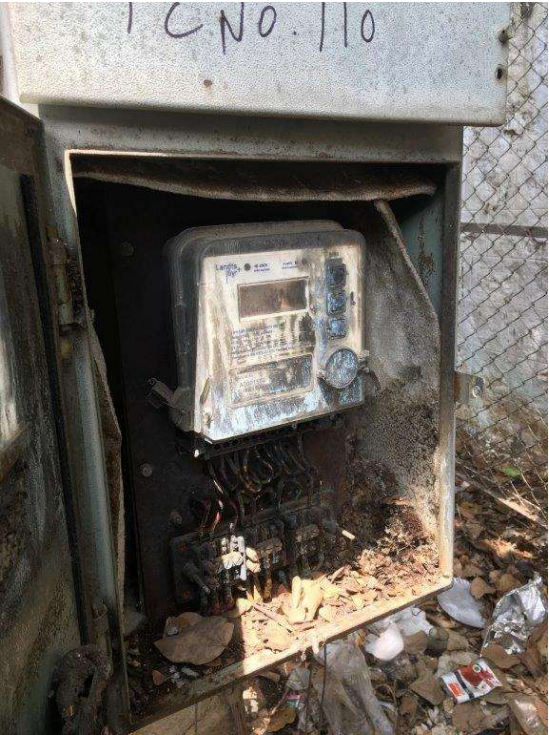
Of the 707 transformers surveyed overall, 130 were within BBMP limits. Of these, 15% transformer meters were defective and not in working condition.
In most cases, physical obstructions like creepers and shrubs were growing very close to the surveyed transformers. We also discovered transformers on poles, and transformer meters infested with rats and birds. Lack of maintenance and improper metering, as discussed earlier, can lead to transformer failures, causing interruptions and power cuts for the city’s residents
To maintain transformers, BESCOM should first have exact data on these. But during the survey, we found data discrepancies. As per BESCOM’s data, it has 577 transformers, whereas as per our field survey there are 707. If this issue is not addressed, it can hamper BESCOM’s maintenance drives.
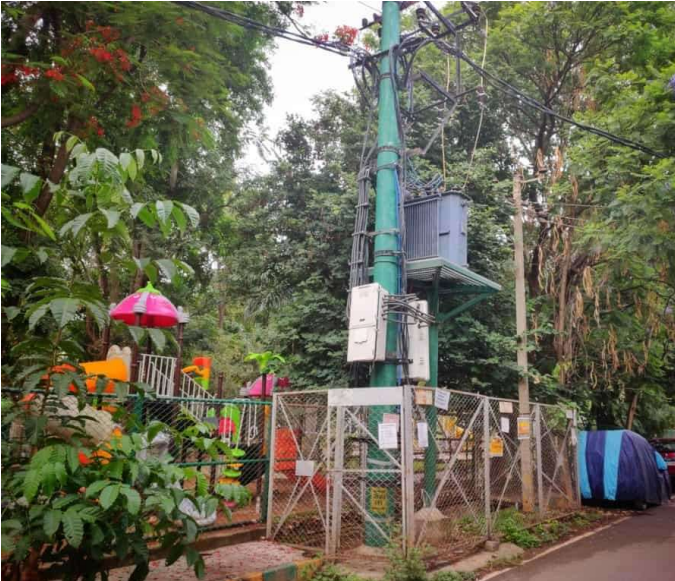
A solution could be to identify and locate transformers using a geographical information system (GIS) mapping technique, and to create a profile for every transformer. This technique would also allow recording of details such as the transformer’s capacity, number of consumers connected to each transformer, and the load.
Besides, there needs to be a thorough energy auditing at the transformer level, as mandated by the Karnataka Electricity Regulatory Commission (KERC). This would ensure that officials maintain and monitor transformers on a regular basis. However, full compliance to the mandate is yet to be seen.
Distribution transformers are indeed the unsung heroes of the entire distribution network. Often
overlooked, they work in the background so that consumers continue to receive seamless power at home. They also provide visibility to BESCOM about any last-mile connectivity issues at the consumer-end. Given that BESCOM is already cash-strapped and reeling under huge losses, proper maintenance and monitoring of this critical asset could bring in financial efficiency into the system, while enabling reliable power supply to consumers.

In our previous blog in the Measuring the Microns series, we briefly...

In this blog series titled Measuring the Microns, we examine why greater...

India’s transition to a cleaner power system has moved from a supply...

In the first blog in ‘The AI shift’ series, we examined what...
With growing electricity demand, renewable energy penetration, and storage requirements, Indian distribution...

In the first blog in ‘The AI shift’ series, we looked into...