
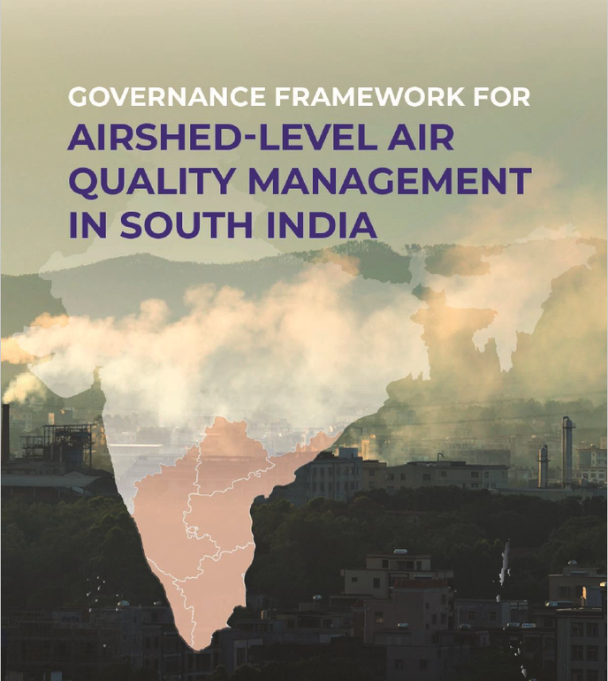
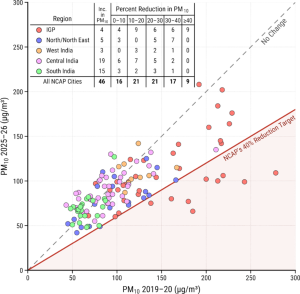
Air pollution in South India receives less policy attention than pollution in Delhi-NCR and the Indo-Gangetic Plain (IGP). Yet, the region has 25 of India’s 131 non-attainment cities under the National Clean Air Programme (NCAP). CPCB data from 2021–2025 show that annual PM10 levels exceed national standards in major southern cities, while PM2.5 remains below the annual standard in all except Visakhapatnam. Rising pollution levels in some cities point to the need for early, coordinated action.
NCAP has allocated about INR 2,862 crore to non-attainment cities since 2019–20, while the XVth Finance Commission has provided another INR 13,561 crore to million-plus urban agglomerations. However, only 9 of 131 funded cities have achieved the NCAP target of a 40% reduction in PM10.
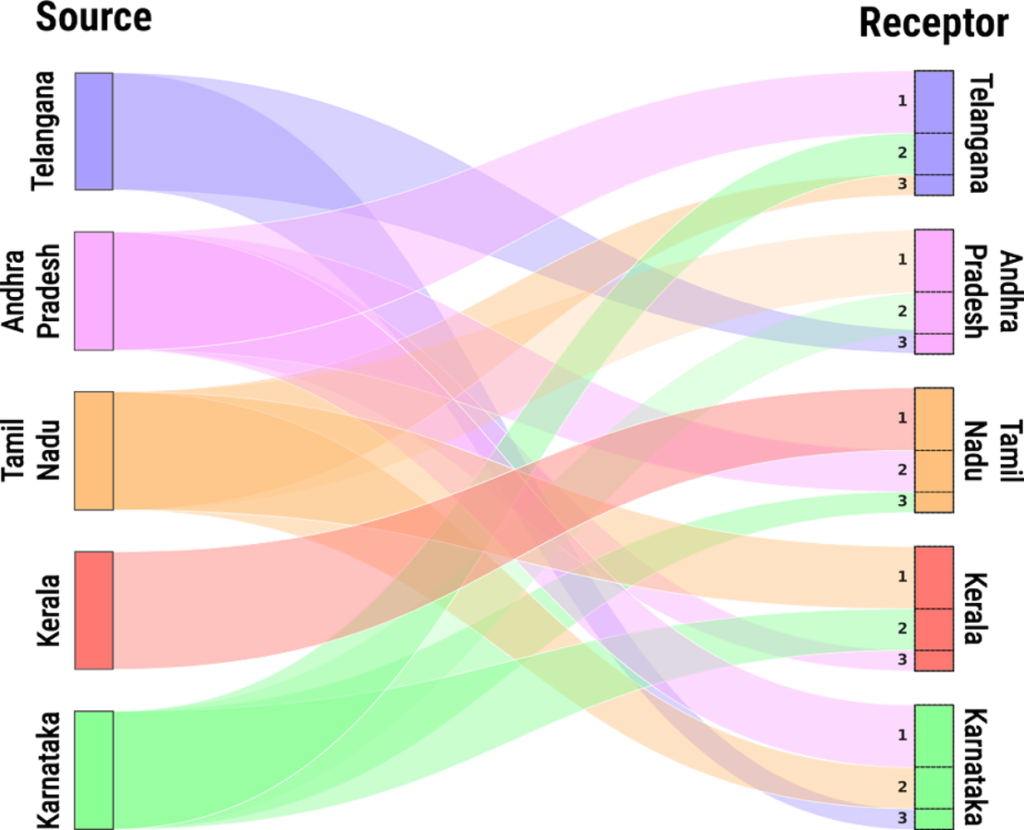
One reason is that pollution does not stop at city or state boundaries. Cities can control emissions within their jurisdictions, but some of the pollution they experience comes from elsewhere. This makes a regional approach to air quality management necessary.
The study used chemical transport modelling to estimate how much pollution moves between five South Indian states and how much originates within each state. It also examined existing institutional approaches in India and developed a phased framework for regional cooperation among the five states.
At the annual average level, 38%–65% of pollution comes from within the South Indian region, while the rest is transported from outside.
The share of local contribution is
Unlike Delhi-NCR and the IGP, the contribution from neighbouring states varies with weather conditions and geography. While major emission sources are similar across the region, their relative contribution differs between states.
The study proposes a two-stage approach to regional cooperation.
Stage 1: Voluntary cooperation
The five states agree on a common regional goal, while choosing their own measures based on modelling results and available policy instruments. This stage would also build shared systems for emissions, monitoring, and financing.
Stage 2: Statutory coordination
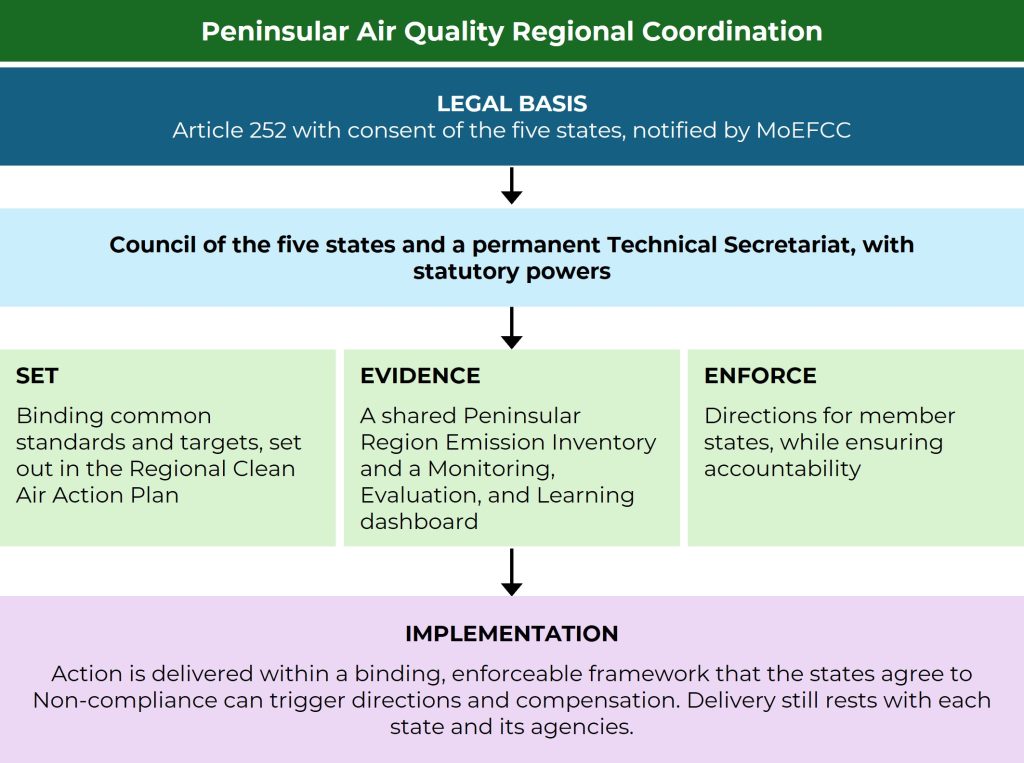
The states could establish a statutory body called Peninsular Air Quality Regional Coordination (PARC) by consent under Article 252 of the Constitution. PARC would set binding regional targets, while implementation would remain with the states.
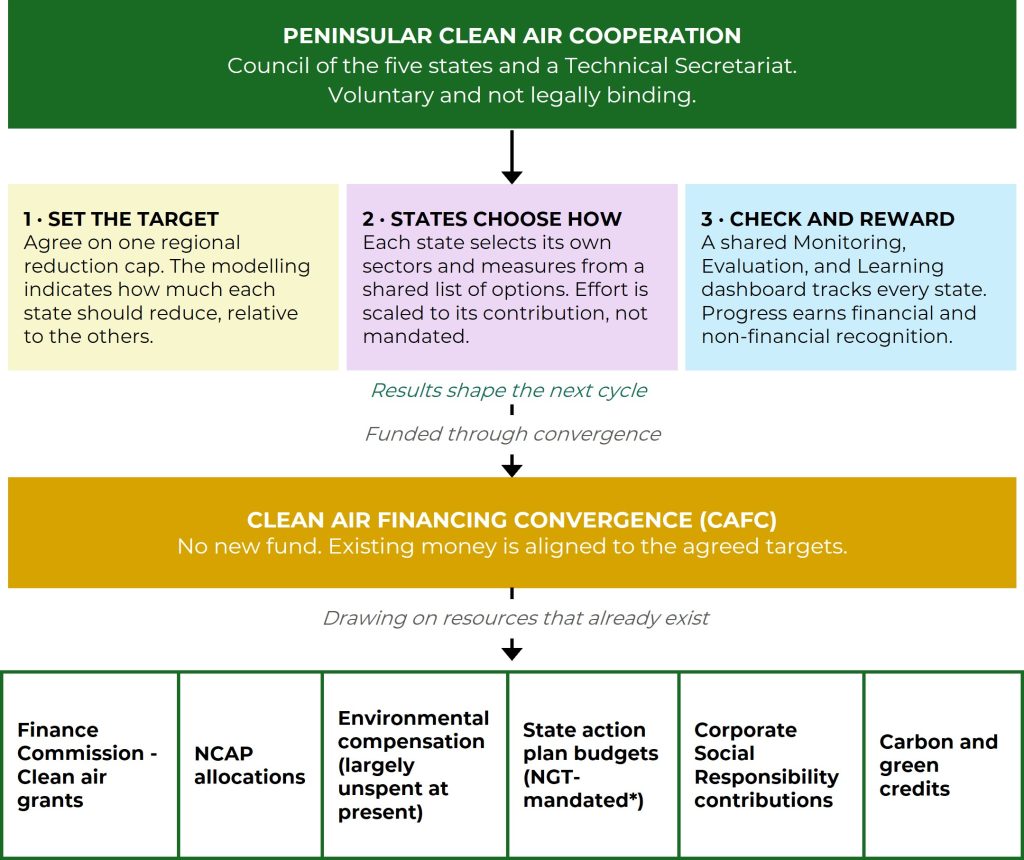
Both stages would rely on three shared instruments:
The study recommends different interventions across sectors:
Rather than creating a new fund, the study proposes Clean Air Financing Convergence (CAFC) to align existing funding sources, including Finance Commission grants and largely unspent environmental compensation, with regional air quality priorities.
The central message is simple: air pollution crosses boundaries, so clean-air action must do the same.
More about publication |
|
|---|---|
| Date | 19 August 2026 |
| Type | Reports |
| Contributors | |
| Publisher | CSTEP |
| Related areas | |
| Pages | 72 |
Get in touch with us at
cpe@cstep.in