


In January 2021, the massive ozone hole over Antarctica closed completely. The milestone meteorological event occurred for the first time in 40 years since scientists began monitoring the ozone hole, and 34 years since the signing of the Montreal Protocol.
This may give us reason to celebrate the International Day for the Preservation of the Ozone Layer or World Ozone Day on a high. However, the cheer might be short-lived, given that not long ago, in August 2020, the ozone hole — formed due to meteorological events as well as due to the growing presence of ozone-depleting substances in the stratosphere — had spread to a whopping 24.8 million square kilometers!
This year’s World Ozone Day theme “Montreal Protocol — keeping us, our food and vaccines cool” seeks to highlight all that the Montreal Protocol does– from slowing climate change to helping boost energy efficiency in the cooling sector, which contributes to food security.
The ozone layer, a fragile shield of gas, lies in the lower portion of the stratosphere, protecting the Earth from the Sun’s harmful UV radiation, making life possible here. Scientists first got concerned over the increasing size of the ozone hole in the early 1980s. In 1987, the UN declared the Montreal Protocol to initiate global efforts to protect the ozone layer from ozone-depleting substances, such as chlorofluorocarbons (CFCs) and hydrochlorofluorocarbons (HCFCs), which were commonly used in refrigerators and air conditioners.
India joined these global efforts and became a part of the Montreal Protocol in 1992, following which it banned and phased out ozone-depleting substances.
To commemorate the date of the signing (in 1987) of he Montreal Protocol on Substances that Deplete the Ozone Layer (resolution 49/114), the UN General Assembly proclaimed 16 September as the International Day for the Preservation of the Ozone Layer, in 1994.
India has taken several measures towards the preservation of the ozone layer. The 2020–21 Annual Report of the Ministry of Environment, Forest and Climate Change (MoEFCC) mentions the recent steps taken, including the setting up of an Ozone Cell as a National Ozone Unit (NOU) and the constitution of an empowered steering committee (ESC) to implement the Montreal Protocol.
Further, 160 enterprises, including a large number of micro, small and medium enterprises (MSMEs) have entered into a Memorandum of Agreement (MoA) with the Ozone Cell for implementation of technology conversion towards non-ozone-depleting substances with low global-warming potential — especially in the foam sector. Interestingly, India is one of the developing countries under the Montreal Protocol to have achieved the complete phase-out of HCFC 141 b (one of the most potent chemicals involved in ozone depletion) in the foam manufacturing sector. The Ministry has also initiated several skill development opportunities through training and testing facilities.
In line with global efforts, India has also prepared an India Cooling Action Plan, as recommended by the United Nations Secretary-General in his 2019 World Ozone Day message. The plan, initiated in 2019, details actions needed to provide access to sustainable cooling and thermal comfort for all, looking at the next 20 years. It aims to reduce cooling demand across sectors by 20% to 25% by 2037–38, reduce refrigerant demand by 25% to 30% by 2037–38, and reduce cooling energy requirements by 25% to 40% by 2037–38.
One of the most successful environmental agreements to date, the Montreal Protocol has united global efforts to phase out ozone-depleting substances, healing the hole in the ozone layer.
This establishes the power of dedicated collective action, as emphasised by Inger Anderson, Executive Director, UNEP, on Ozone Day 2020, when she said, “When people work together, they can fix problems on a global scale.”
However, while we can bask in the glory of the possibilities collective action brings, and rejoice at
the closing of the ozone hole for now, it must be remembered that we are in this for a long haul.
As the world — already under stress from the climate change crisis — battles the pandemic, we need continued global action to correct our shared present and build a better tomorrow.
The author is Communications Officer at the Center for Study of Science, Technology and Policy (CSTEP), a research based think tank.
In our previous blog in the Measuring the Microns series, we briefly...
In this blog series titled Measuring the Microns, we examine why greater...
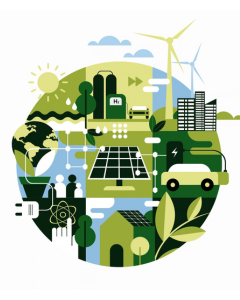
India’s transition to a cleaner power system has moved from a supply...

In the first blog in ‘The AI shift’ series, we examined what...
With growing electricity demand, renewable energy penetration, and storage requirements, Indian distribution...

In the first blog in ‘The AI shift’ series, we looked into...