
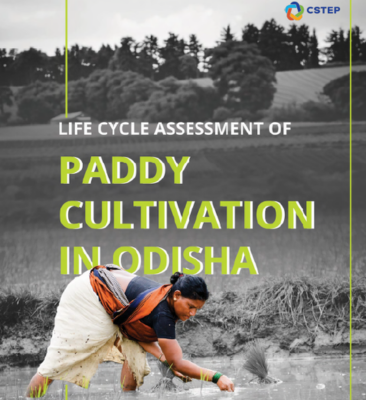
Paddy is at the heart of Odisha’s agriculture. It covers nearly 46% of the state’s gross cropped area and supports the livelihoods of millions of farmers. But rice cultivation is also resource-intensive, requiring large amounts of water, fertilisers, and energy. It is a significant source of greenhouse gas emissions, making it an important sector for climate action.

This study uses Life Cycle Assessment (LCA) to understand the full environmental footprint of paddy cultivation in Odisha. Unlike conventional assessments that focus only on farm-level emissions, LCA captures impacts across the entire cultivation cycle—from the production of inputs and irrigation to on-field farming activities.
The study compares conventional paddy cultivation with two climate-smart alternatives:
Paddy cultivation in Odisha generates an estimated 16.6 million tonnes of CO₂ equivalent emissions annually. Of this,
The findings show that climate-smart cultivation practices can significantly reduce environmental impacts. However, these benefits often come with lower crop yields, highlighting the need to carefully balance sustainability and productivity goals.
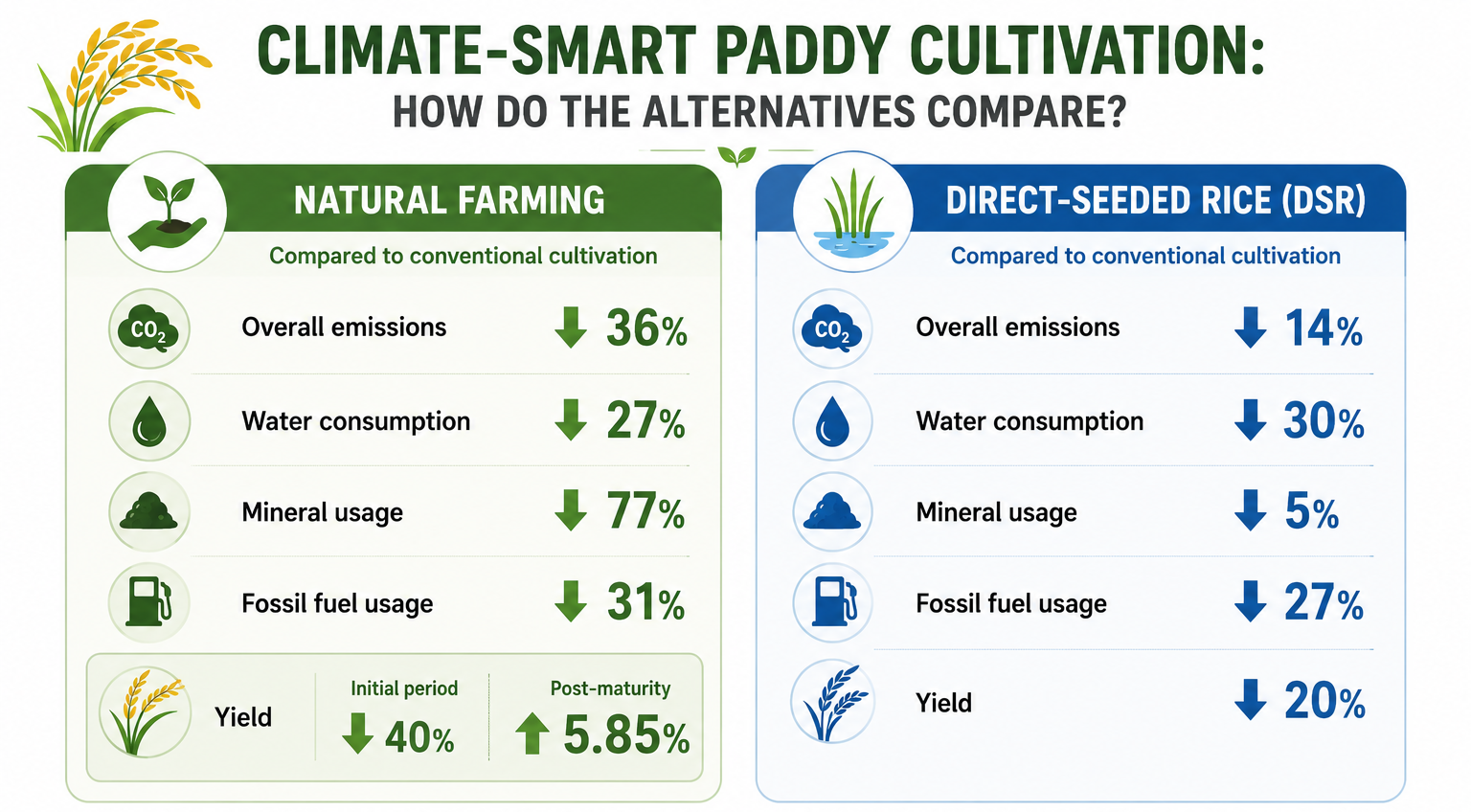
The transition to climate-smart paddy cultivation offers clear environmental benefits, including lower emissions, reduced resource use, and improved soil health. However, policymakers and practitioners must also account for potential yield reductions and the trade-offs involved.
By linking emissions, water use, resource consumption, and crop productivity, this study provides evidence to support more informed decisions on sustainable agriculture in Odisha.
Read the full report to explore the findings, methodology, and policy recommendations.
Deeksha Shridhar (Former Senior Analyst at CSTEP) co-authored the report.
More about publication |
|
|---|---|
| Date | 17 June 2026 |
| Type | Reports |
| Contributors | |
| Publisher | CSTEP |
| Related areas | |
Get in touch with us at
cpe@cstep.in