
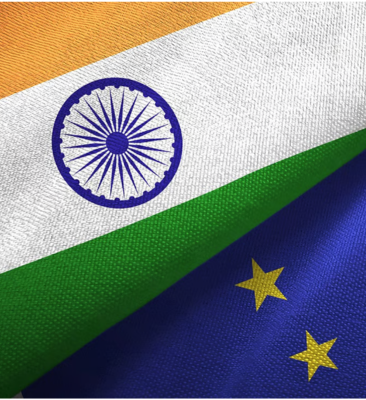
Earlier this month, an 11-member European parliament delegation was in India for consultations with Indian parliamentarians and government officials. A key discussion point during the three-day visit was the early implementation of the Free Trade Agreement (FTA) between India and the European Union (EU). Negotiations for the joint India-EU FTA concluded and were formally announced in late January 2026 during the 16th India-EU Summit. As a comprehensive partnership encompassing goods, services, investments, and intellectual property, the FTA aims to significantly boost bilateral trade by eliminating or reducing over 90 per cent of tariffs and deepening market access. At a time when supply chain security is increasingly important, it promises to bolster supply chain resilience by diversifying sourcing dependency. Currently in the ratification phase, the FTA is expected to come into force by early 2027.
While the opportunity is huge, harnessing it requires thorough preparation. The FTA has a dedicated chapter on ‘Trade and Sustainable Development,’ and commitments made therein are legally binding. These primarily relate to implementing the Multilateral Environmental Agreements (MEAs), safeguarding workers’ rights in line with the core International Labour Organisation (ILO) principles, and furthering women’s economic empowerment and gender equality. Compliance with international regulations is, therefore, a clear prerequisite for leveraging the deal.
Click here to read the full article
More about publication |
|
|---|---|
| Date | 22 April 2026 |
| Type | Op-eds/Interviews/Press Releases |
| Contributor | |
| Publisher | Deccan Herald |
| Related areas | |
Get in touch with us at
cpe@cstep.in