


Following our photo essay from the field, this blog looks at the region’s energy paradox and what it means for communities.
Based on conversations with village residents, the blog explores how unreliable electricity intersects with challenges around water, livelihoods, and essential services, and how decentralised renewable energy could help address some of these needs.
From powering water pumps and cold storage to improving access and safety, the story looks at how the Model Solar Village approach can go beyond electrification to support more resilient communities.
A school-going teen who aspires to be a professional kabaddi player raises a very serious concern, wise beyond his years. Subtly, he acknowledges that the climate in Kashmir is pleasant, but they can also feel the very real results of climate change. He points out that there are still many houses without electricity and many who face unemployment. Can renewables finally light up the land and the lives of its people?
Renewable energy should be an easy win here, so why hasn’t it taken off in Jammu and Kashmir (J&K)? The region’s energy paradox is stark: it sits on some of India’s richest renewable energy reserves, second only to Rajasthan in solar potential and with 16,000 MW of technically feasible yet untapped hydropower potential. Yet, till the third week of December, J&K was importing over 95% of its electricity, leaving its citizens to live with unreliable, expensive power.
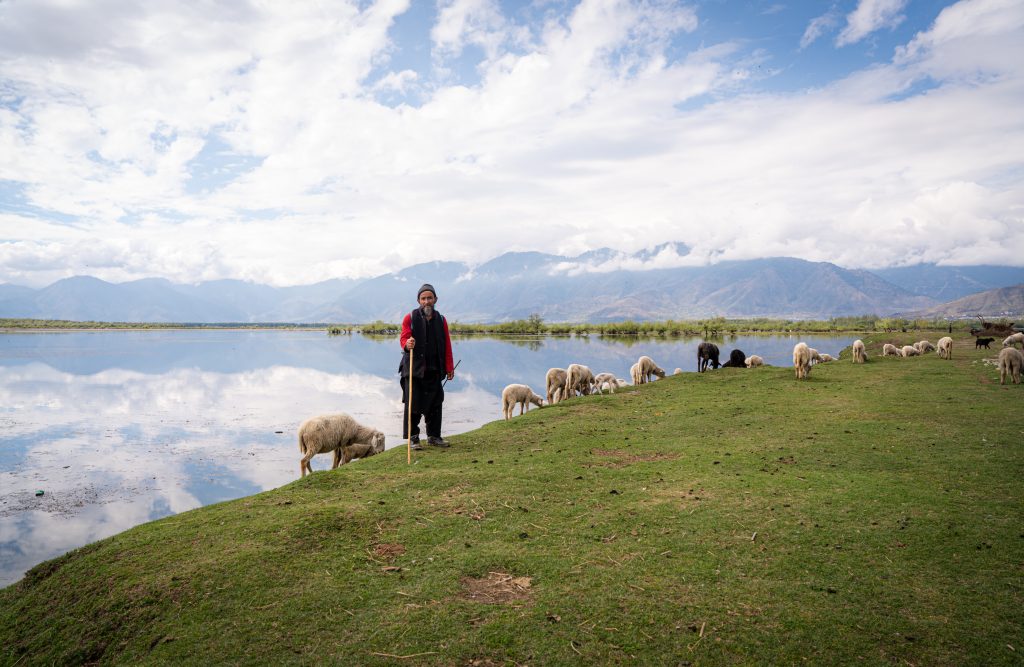
During a field visit to Kashmir, CSTEP interviewed local residents to understand their experiences with electricity, livelihoods, water access, and awareness of the government’s solar initiatives. What follows are their voices, a look at what needs attention on the ground and how renewables can genuinely make a difference.
Weak transmission infrastructure, rugged terrain, and seasonal variation pose the biggest challenges for most energy solutions.
The union territory is divided into two main geographical and agro-climatic regions: the lower plains of Jammu, and the oval-shaped, mountain-ringed bowl of Kashmir.
This landscape poses serious challenges to the construction, operation, and transmission of power. During winters, J&K’s hydel capacity is nearly halved while electricity demand peaks, as citizens bring out heaters and geysers to cope with the harsh cold. Most of J&K’s hydro projects are run-of-the-river systems: they depend on the river’s flow and do not store water in reservoirs. When the river slows, so does electricity generation, forcing the region to import power at higher costs.
Climate change is making things worse. Receding glaciers and decreasing snowfall are shifting river flows, sending more water downstream earlier in the year and leaving behind less water for late summer and winter.
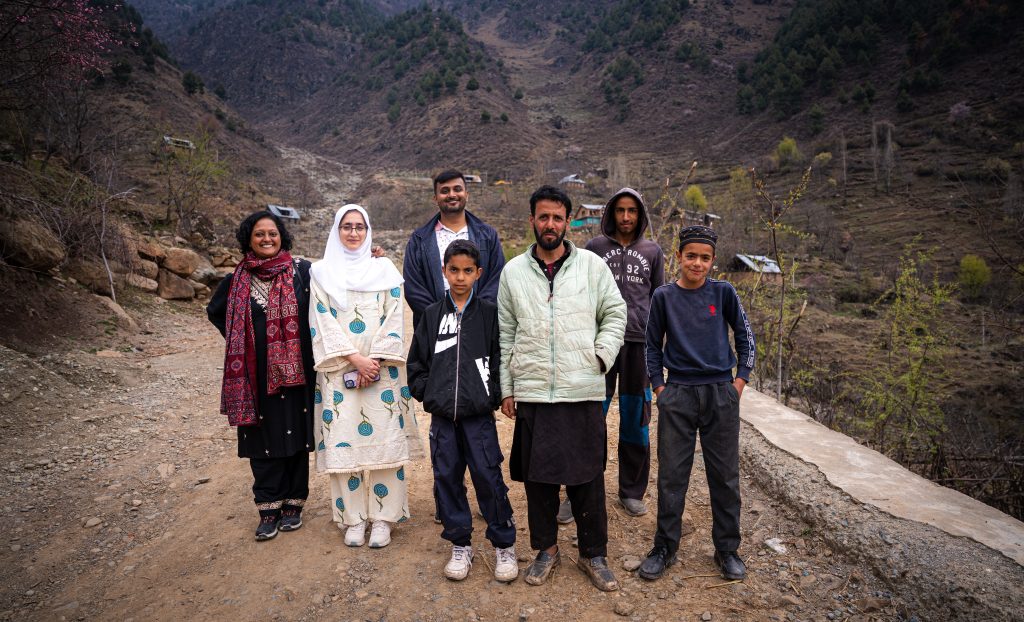
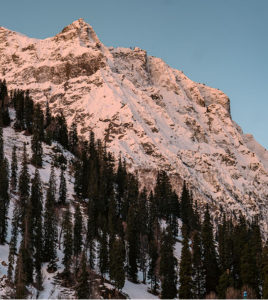
Ziram Chichi, a 35-year-old father of three boys, looks to the mountain peak towering over his village Chountwaliwar, in Ganderbal district, and sees the small patch of snow still visible against the brown and green. The villagers have depended on the snowmelt for their water needs for decades. But the patch is shrinking. ‘We will have water for another week or so. And then we will have to bring in tankers’, he said, with his forehead creasing in worry.
Moreover, nearly 48% of the imported or generated power is lost before it ever reaches consumers, making it among the highest Transmission and Distribution (T&D) loss rates in the country in 2023–24. This is mainly a consequence of J&K’s weak grid infrastructure, power theft, and distribution challenges.
In response, the Jammu and Kashmir Energy Development Agency (JAKEDA) is taking steps to implement the Model Solar Village programme initiated by the Ministry of New and Renewable Energy, to boost the uptake of renewables and power not just homes but livelihoods. CSTEP surveyed 10 villages to assess the feasibility of this programme and determine how integrating renewables can help meet citizens’ needs.
J&K is looking at small, decentralised systems to provide citizens with reliable, clean, and affordable power. Decentralised renewable energy (DRE) generates power close to where it is used, rather than at large, centralised plants far away. This reduces the need for long transmission lines and the associated losses. For a region defined by altitude, remote settlements, and difficult terrain, DRE is not just a technically feasible option but also a practical one.
However, powering J&K with renewables is not just about electrification but also about what electricity makes possible in people’s lives.
For a region defined by altitude, remote settlements, and difficult terrain, DRE is not just a technically feasible option but also a practical one.
Kashmir’s energy challenge is precisely such a problem—one that has many dimensions, so the solution must do more than one thing. For renewable energy to be a success story in Jammu and Kashmir, it needs to address issues beyond access to clean and reliable electricity.
Through the course of our conversations with local villagers, government officials, and village workers, we learned that meeting basic necessities, from electricity to water, takes a significant chunk out of monthly incomes.
Zaitoona Begum, the former Sarpanch of Halqa ‘C’ of Chountwaliwar in Tehsil Lar, Ganderbal district, points to the disparity in access to basic necessities in her village, which has about 1,500 households. Some households still depend on wood stoves and chulhas for cooking and heating.
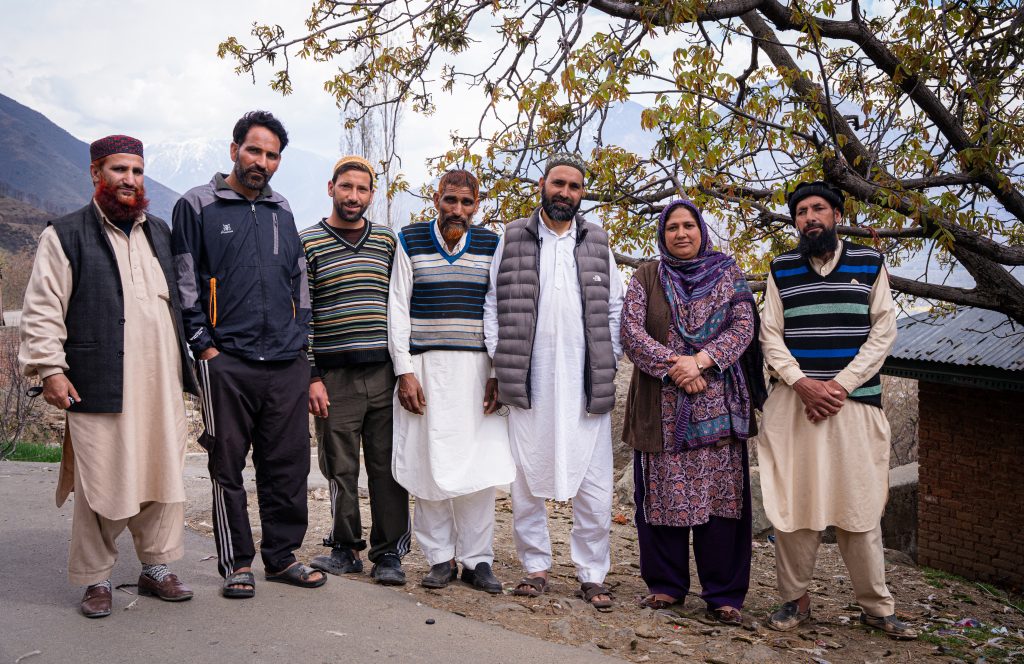
‘There are not a lot of livelihood opportunities, and unemployment is rampant. Some have jobs, but many work as labourers. This year has been especially difficult. Even when it comes to farmland, most are small landholdings. People have set up apple, apricot, and cherry orchards on the small pieces of land they own. It is not easy to run our homes’, she said.
Fifty kilometres away, beside the Wular Lake (India’s largest freshwater lake), the story is different in detail, but the same at its core.
Here too, berozgari, not bijli, is the main concern. Villagers depend on fishing for their livelihoods. But summer heat and the absence of cold storage cut into what fishermen can actually earn from their catch; fish spoils before it reaches buyers, and with it, the income. Wular, a protected wetland under the Ramsar Convention, is now being developed as an eco-tourism destination. But the community that depends on it most has been left out of that growth. Around 2,000 households live on the lake’s edge. Most are poor, many from the older generations never had formal schooling, and several work as construction labourers between fishing seasons.
Berozgari, not bijli, is the main concern.
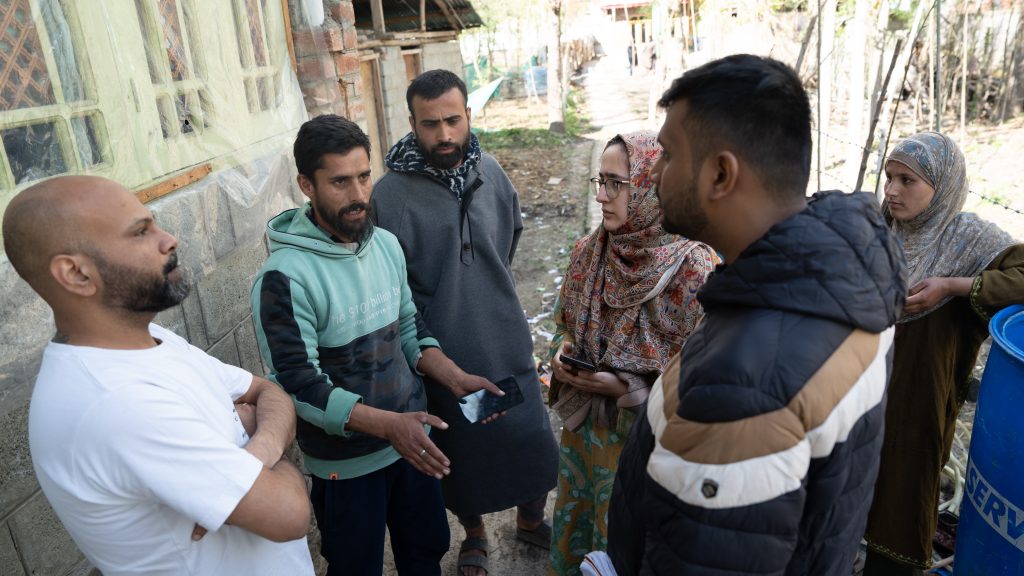
Pointing to the need for inclusive development, Sheikh Madiha, Senior Analyst at CSTEP, said, ‘Our fieldwork in Kashmir showed us that clean electricity can’t just be about generation; it has to be about building resilience and creating real opportunities for the local communities’. Madiha led the team that developed Detailed Project Reports for JAKEDA’s Model Solar Village programme and evaluated feasible solutions for installing renewables in the villages.
At the village scale, solar systems can back up critical health facilities and ensure cold chains work through the night. They can keep school classrooms lit and support digital learning. They can run the water pumps that fill tanks and borewells, providing drinking water independent of grid reliability. Solar street lighting can make public spaces safer, especially for women and children after dark. Agrivoltaic systems can also offer farmers a dual income: crops below, energy above.
At the village scale, solar systems can back up critical health facilities and ensure cold chains work through the night.
The 10 villages selected under MNRE’s Model Solar Village programme are being designed with precisely this range of interventions in mind — not a single-point solution, but a layered response to layered problems. With an outlay of INR 800 crore, the programme aims to solarise at least one village in every district across India, allocating a grant of INR 1 crore to each village for clean energy adoption.
But as with any multifaceted problem, prioritisation is key to ensuring that funds are properly utilised. Zaitoona Begum echoed this thought: ‘Solar can bring some relief if the system is set up well. When funds are limited, we need to prioritise the intervention we pick, so that it benefits the larger community and not a few people alone’.
During her tenure as sarpanch, she installed solar streetlights in the village to help people travel after dark, whether to the masjid, a neighbour’s house, or for an emergency. But she is also pragmatic: she says that government schemes might not end poverty on their own, but they can ease some of the load, and sometimes, that’s raahath (relief) enough.
For the people here, solar is not an abstract transition. A reliable solar-powered cold storage unit could mean the difference between a fisherman earning a fair price for his catch and watching it go to waste. A reliable streetlight could make someone’s walk home safer. These are not grand interventions but the kind that decide whether a family eats well or cuts back and whether a youngster sees a future in the village or looks to leave.
Solar is not an abstract transition.
Kashmir’s energy paradox will not be resolved by solar alone. But if the systems are built around what communities actually need—access to clean water, livelihood opportunities, and a better quality of life—solar can do more than just light a bulb.
India’s transition to a cleaner power system has moved from a supply...

In the first blog in ‘The AI shift’ series, we examined what...
With growing electricity demand, renewable energy penetration, and storage requirements, Indian distribution...

In the first blog in ‘The AI shift’ series, we looked into...

In this three-part blog series titled ‘The AI shift’, I examine how...
Snow-covered mountains, pristine lakes, green valleys—this is the Kashmir we know. But...