
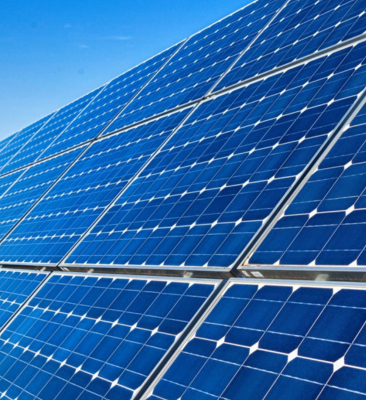
With over 50 GW of renewable capacity stranded nationwide as of June 2025, the message is clear: identifying and overcoming the challenges in India’s construction sector is no longer optional but essential to sustain the country’s solar growth.
As of August 2025, India’s solar capacity had surged to 123.13 GW, a testament to the country’s growth story in clean energy. In just the first half of 2025, India added 18 GW to this capacity, marking a 31% rise over last year’s figure. Yet, persistent bottlenecks in the construction and execution of solar projects threaten this growth. These bottlenecks particularly affect large-scale solar projects, which account for 86% of India’s solar capacity. With over 50 GW of renewable capacity stranded nationwide as of June 2025, the message is clear: identifying and overcoming the challenges in India’s construction sector is no longer optional but essential to sustain the country’s solar growth.
The Road Ahead
Embracing global best practices and strengthening domestic systems will unlock faster, safer, and more efficient utility-scale solar construction. Practices such as no construction at the conceptual stage and only carrying out enabling works such as fencing, grading, and approach road construction in the feasibility stage will help. Full-scale construction should begin only after good-for-construction (GFC) drawings are issued.
Further, EPC project management must be modernised through digital tools, stronger coordination, and workforce training. Grid infrastructure must expand in sync with renewable capacity. Above all, closer collaboration between utilities, developers, and regulators is vital to minimise delays in approvals and power purchase agreements. A disciplined approach at the construction stage will also translate into lower operation and maintenance costs and more stable generation over 25 years—the lifespan of a solar power plant.
Read the full article here
Shashikant Yadav (Manager-Engineering Services at Blueleaf Energy) co-authored the article.
More About Publication |
|
|---|---|
| Date | 10 November 2025 |
| Type | Op-eds/Interviews/Press Releases |
| Contributor | |
| Publisher | PV Magazine |
| Related Areas | |
Get in touch with us at
cpe@cstep.in