
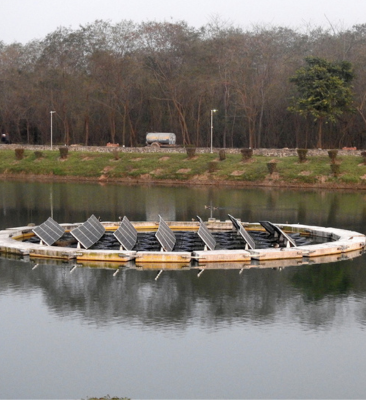
India’s solar generation capacity has expanded remarkably, but the systems governing energy exchange have not kept pace. Rooftop solar accounts for roughly 17% of India’s installed solar capacity of 135GW, but most of this generation remains locked within net-metering or gross-metering frameworks. Similarly, plants in India’s agricultural solar PM-KUSUM program are locked into power purchase agreements (PPAs) with electricity distribution companies (DISCOMs) that prioritize developers over farmers.While these mechanisms have helped scale distributed solar, they still offer limited price discovery and no dynamic signals reflecting time, location, or grid conditions. This means that surplus midday solar often has little economic value beyond bill offset, even as evenin demand peaks continue to rely on fossil fuel-based generation.
Peer-to-peer trading and digital energy markets are not intended to replace DISCOMs. They instead create opportunities for utilities to transition into new roles as market operators, system integrators, and validators focused on network management, reliability, and settlement. Regulators should focus on enabling innovation without impairing grid stability. Regulatory sandboxes and city-scale pilots can allow new models to be tested before rollout. Digital energy markets can strengthen energy equity, build resilience through local balancing, and accelerate renewable integration by ensuring surplus solar generation is efficiently utilized. India has already demonstrated its ability to build national scale digital infrastructure. Extending these principles to the power sector can unlock the next phase of the energy transition, allowing distributed assets to act as a coordinated national resource – one transaction at a time.
Click here to read the full article
More About Publication |
|
|---|---|
| Date | 2 March 2026 |
| Type | Op-eds/Interviews/Press Releases |
| Contributors | |
| Publisher | pv magazine |
| Related Areas | |
Get in touch with us at
cpe@cstep.in