

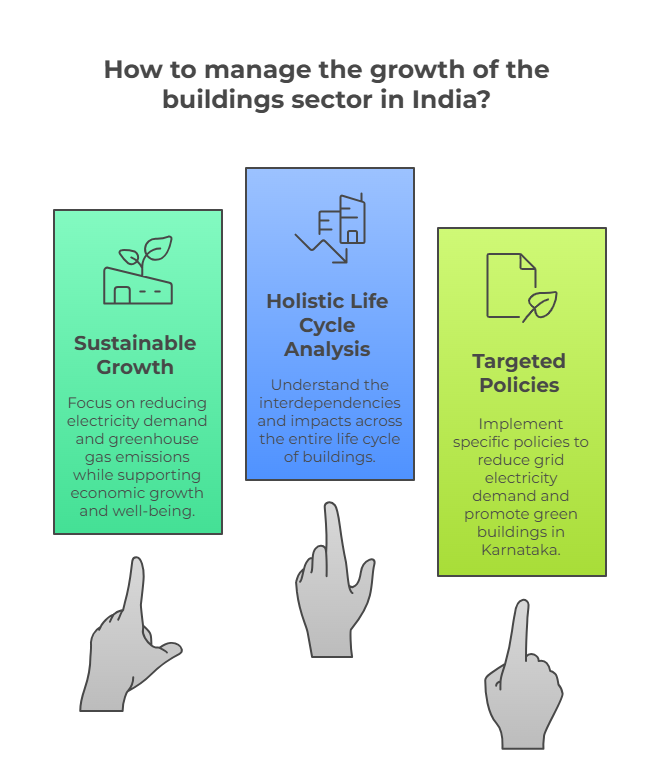
India’s buildings sector accounts for a significant share of the country’s electricity demand and greenhouse gas emissions, while also supporting economic growth, employment, and human well-being. With rapid urbanisation driving continued demand for new housing, the sector is expected to grow substantially in the coming decades. At the same time, it already places considerable pressure on resources, energy systems, and the climate, making the way this growth unfolds critically important.
The built environment is best understood through a holistic, life cycle lens that spans production, construction, use, and end of life. This systemic analysis examines collective patterns, interdependencies, stakeholder roles, and policy levers across entire cities, regions, or the nation. It highlights how decisions at one stage of the life cycle can influence supply chains, energy systems, and outcomes beyond individual buildings.
The analysis focuses on the residential buildings sector in Karnataka, which has adopted targeted policies to reduce grid electricity demand and expand certified green buildings. With the state’s residential built-up area projected to nearly double by 2050 compared to 2020, this focus allows for an assessment of stakeholder agency, policy effectiveness, and systemic challenges shaping the transition towards a more sustainable built environment.
Sweta Bhushan (Former Senior Analyst at CSTEP) also co-authored the report.
More About Publication |
|
|---|---|
| Date | 22 December 2025 |
| Type | Reports |
| Contributors | |
| Publisher | CSTEP |
| Related Areas | |
| Pages | 38 |
| Copyright | CSTEP |
Get in touch with us at
cpe@cstep.in