


Data on air quality through enhanced monitoring systems an the timely dissemination of this data are two of three main objectives of the National Clean Air Programme (NCAP), announced by India to address growing concerns of India’s deteriorating air quality.
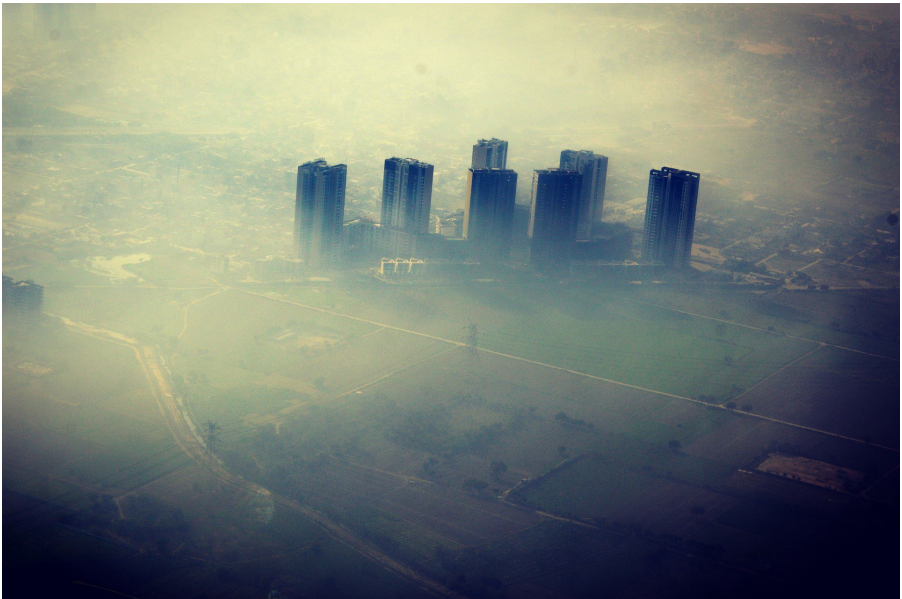
Across India, the lack of adequate data on air pollution is a challenge to addressing air pollution. After all, if you do not know what pollutes and by how much, how can you find solutions? Going in blind has rarely been an effective strategy for solving a problem.
One of the primary reasons for inadequate monitoring is the high cost of purchasing and maintaining monitoring equipment. While pollution control boards have invested in reference-grade air quality monitoring systems, these capture ambient air pollution and not exposure, especially at hyper local levels. This hampers the ability of regulatory approaches to accurately identify vulnerable populations and take steps towards protecting public health.
Low-cost sensors could ‘disrupt’ the current ecosystem by:
· Significantly expanding measurements
· Allowing citizens to measure pollution in their local environment
· Being able to estimate personal exposure (a significant gap at present)
· Being integrated into monitoring systems.
Studies have recommended using a network of low cost sensors along with reference grade instruments to continuously monitor air quality. While noting the potential of low-cost sensors to improve monitoring in under-served areas, the First WHO Global Conference on Air Pollution and Health (2018), cautioned that “new protocols and standards are needed to guide the effective use and interpretation of data produced by citizen science and other applications.”
Before deploying sensors, it is important to understand its limitations and sensitivities. A majority of low-cost sensors in the market today use optical scattering to assess the concentration of particulate matter. Factory calibration is done for a particular type of aerosol in laboratory conditions. Thus, they need to be reassessed for the local aerosol type found in India. Ensuring that the science behind these methods (the size and chemical constituent of particulate matter affect the scattering) are considered is essential to ensuring that the data is interpreted correctly
Low-cost sensors can significantly expand the citizen science on air pollution. However, to be able to rely on this data and use it in policy decisions, it is crucial to educate both citizens and regulators on the science, scope, and limitations of sensors.Regulators should also plan for integrating the data for better usability. A smart, integrated platform for monitoring and analysing reasonably accurate data of changing pollution levels, further integrated with meteorological data, can help predict/forecast the spread of pollutants through air and help in taking precautionary steps.
In recent research, there is growing acknowledgement of air pollution as a ‘system’ that cannot be totally isolated from outside interactions and influences, and therefore, the need to study it as non-linear systems. For instance, there is significant possibility of localised air pollution affecting global levels. Examples of such an impact is being seen in the relatively high levels of air pollution and ground pollution deposition in some Arctic regions. There is growing concern around the precipitation of black carbon on ice which has an impact on the global radiation balance and contributes to sea-level rise.
The network of technical institutions and the Technical Assessment Cell envisaged under NCAP can play a significant role in making information available, training, and helping put in place a large-scale scientific study to capture data on air pollution. Treating this exercise with the discipline of a scientific study with adequate quality checks can enhance our understanding of air pollution and our attitude and measures towards reducing it.
CSTEP’s Air Pollution lab has been collocating low-cost instruments (for PM) against reference-grade instruments (Beta-Attenuation Monitor) over the last few months. Interested researchers/vendors are welcome to validate their low-cost sensors at CSTEP.

India’s transition to a cleaner power system has moved from a supply...

In the first blog in ‘The AI shift’ series, we examined what...
With growing electricity demand, renewable energy penetration, and storage requirements, Indian distribution...

In the first blog in ‘The AI shift’ series, we looked into...

Following our photo essay from the field, this blog looks at the...

In this three-part blog series titled ‘The AI shift’, I examine how...