


According to Niti Aayog, the demand for energy in India is set to grow from the current level of 5,311 TWh to 18,635 TWh by 2047, an increment of 3.5 times. As demand for energy observes an unprecedented increase, it becomes pertinent to explore novel sources of energy, such as distributed renewable energy systems (DRES). These new sources of energy accord an opportunity for generation to be no longer limited to centralised sources only, thus presenting a unique pivot in the context of two essential public goals — the transition to renewables and attainment of inclusive and resilient electrification.
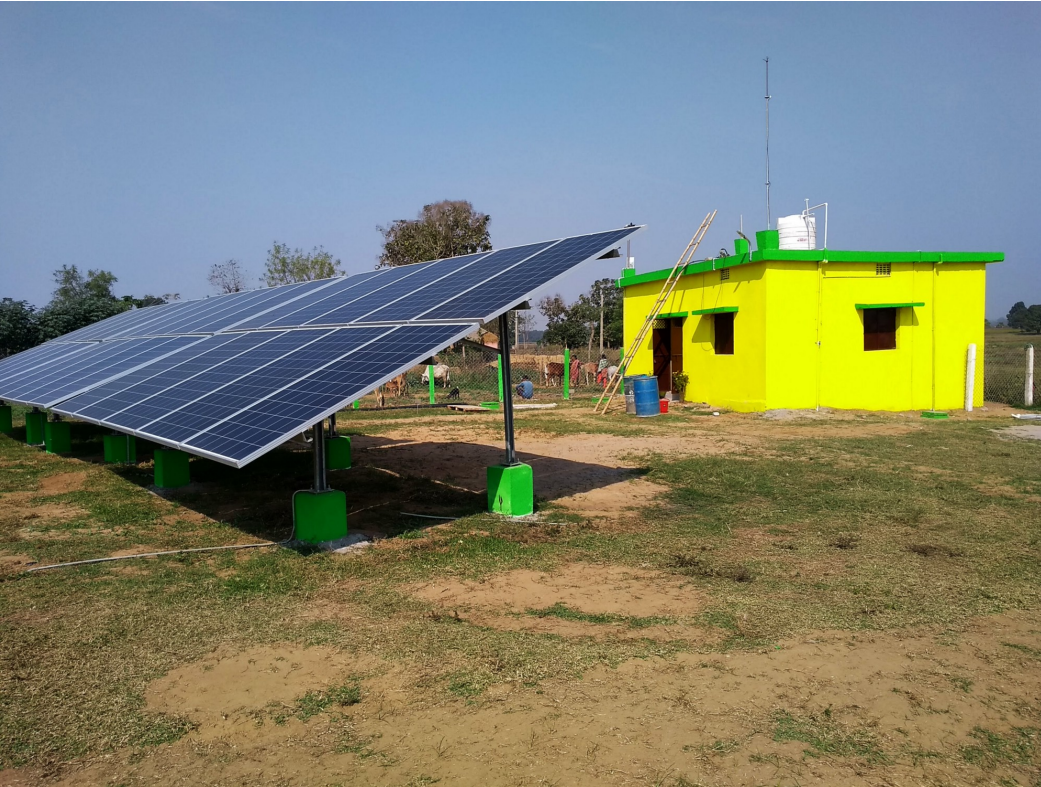
At a time when growing energy needs are met by shortages and price spikes, it is only prudent to facilitate the generation of electricity in a distributed manner — wherein energy is consumed at (or near) the point of generation. India Energy Transformation Platform (IETP), a group of experts constituted to discuss and explore opportunities for decarbonisation of energy, framed an intervention mechanism predicated on a few transformative DRES. These DRES can be focused upon and implemented in different scenarios, depending on the needs and capabilities of the same. However, it is clear that for the decarbonisation potential that these DRES offer to be fully realised, prospective policy needs to pave the way. Presently, the government has recognised the viability and importance of only a handful amongst the technologies identified by IETP, such as solar pumps in agriculture and solar rooftop on buildings.
Firstly, the Pradhan Mantri Kisan Urja Suraksha Utthan Mahabhiyan (PMKUSUM), a government scheme implemented for provisioning of solar pumps and setting up of solar plants on barren land, recently witnessed an infusion of funds from the 2020 budget when its mandate was increased to cover an additional 20 lakh farmers. Though the scheme provides for selling back of energy to the grid at notified prices, it seems to be myopic in light of the entrepreneurial opportunities that can be developed. Distributed energy trading platforms wherein prosumers can buy/sell to each other will help create the mechanism for incentivising solar pumps and plants. The benefits of this are multifaceted, from financial empowerment of rural communities to electrification of remote areas — with solar pumps alone having the potential to power 22% of India’s agricultural energy needs by 2050 — in toto facilitating human development and decarbonisation of energy.
Secondly, within the policy framework for solar rooftops, the latent potential of residential, commercial, and industrial buildings is yet to be exploited. Currently, 90% of the total solar power production comes from ground-mounted installations (mostly large scale IPPs or Solar Parks), which shows the underdeveloped state of distributed solar power generation systems. If developed in the right manner, solar rooftops have the potential to support up to 40% of the building electricity demand by 2050.
Amongst the other distributed technologies being topically discussed currently, there is a significant potential for distributed storage. In particular, the governmental approach in the case of lithium-ion batteries must be revisited. Presently, schemes only focus on subsidisation. In order to swiftly enter the next phase of Electric Vehicles (EVs)– which will be built with solid-state lithium-ion batteries — a deliberate shift towards R&D is imperative. Intervention in this area must also assign adequate weightage to the development of upcoming mechanisms such as vehicle-to-grid systems. If this mechanism is developed appropriately, this can go a long way in ensuring that the EV potential of 4,000 billion passenger kilometers is achieved by 2050 — to elucidate the magnitude of the same, the kilometers traveled by the total vehicular traffic in Great Britain in 2018 was 528 billion kilometres.
The implementation of distributed systems of energy generation and storage can result in the accrual of a host of benefits, with carbon reduction being only one of them. Some of these benefits range from reduction in DISCOM losses due to a decrease in transmission infra related costs, better utilisation of land, financial empowerment, reduction in pollution, sectoral development, and so on. Sadly, it is clear that despite the best efforts at maximising renewables, fossil fuels like coal and gas would continue to be a fundamental source of energy in 2050. Carbon Capture and Sequestration technologies thus have a vital role to ensure pathways towards deep decarbonisation.
In light of this, policy must be framed in a prospective manner that takes into account not only current technological capabilities (solar rooftops, pumps, etc.) but also upcoming innovations and yet to be materialised ideas, to enable the transition to renewable sources of energy. For example, few nascent DRES (such as hydrogen-powered heavy commercial vehicles, metal-air batteries, and airborne wind energy systems) find no place in the extant policy framework. These must be developed to tend to critical areas that are desperate for enhancing carbon-neutral energy pathways, such as the commercial freight sector or the industrial sector. If patterns of energy consumption continue unhindered, under a business-as-usual approach, DRES will make up only 5% of the total energy supply by 2050, as against the possible 15%. The advent of the new decade and the enhanced
ambition of India towards deep decarbonisation represent an opportune time to frame a holistic plan to maximise the role and scale of DRES thus establishing the building blocks for the country’s energy security.
About IETP: The India Energy Transformation Platform is an informal, independent, multi stakeholder group of experts aiming to develop an informed narrative on India’s strategies for meeting its Nationally Determined Contributions (NDCs) through non-linear, transformative solutions. This unique initiative hopes to ensure that India stays ahead of the curve and cements its leadership in the global transition to clean energy — even beyond 2030.
CSTEP serves as the Secretariat for the Platform, supported by Shakti Sustainable Development Foundation (SSEF). IETP is funded by the Swiss Agency for Development and Cooperation (SDC). Follow IETP on Twitter at Energy_IETP; write to us on ietp.cstep@gmail.com for queries.
This article was written by Abishek Nippani, a student of National Law School of India University, as part of her internship at CSTEP. The article is based on
research studies published on www.ietp.in
India’s transition to a cleaner power system has moved from a supply...
In the first blog in ‘The AI shift’ series, we examined what...
With growing electricity demand, renewable energy penetration, and storage requirements, Indian distribution...
In the first blog in ‘The AI shift’ series, we looked into...

Following our photo essay from the field, this blog looks at the...

In this three-part blog series titled ‘The AI shift’, I examine how...