A policy document outlines major challenges faced by Punjab in controlling air pollution and suggests interventions
The Centre for Air Pollution Studies (CAPS) at the Center for Study of Science, Technology and Policy (CSTEP) released a policy document as an addendum to “Vision: Clean Skies for Punjab,” a stakeholder engagement event it organised in Punjab recently to address the issue of air pollution.

The document outlines some of the major challenges that Punjab faces in controlling air pollution — especially pollution arising from stubble burning, industries, and the transport sector during the winter months — and suggests interventions. Recommendations include developing long-term policies for in-situ and ex-situ crop residue management, promoting clean fuel for public transport and industries, developing a centralised platform for industrial continuous emission monitoring system data for research analysis and modelling, and employing quick response (QR) codes in vehicles for detecting pollution under control certificates.
In our previous blog in the Measuring the Microns series, we briefly...
In this blog series titled Measuring the Microns, we examine why greater...

India’s transition to a cleaner power system has moved from a supply...

In the first blog in ‘The AI shift’ series, we examined what...
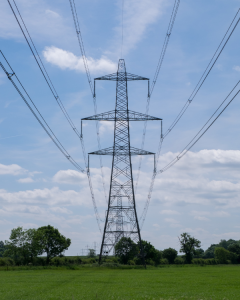
With growing electricity demand, renewable energy penetration, and storage requirements, Indian distribution...

In the first blog in ‘The AI shift’ series, we looked into...