
The Air Sensors International Conference (ASIC) 2024 was concluded at Riverside, California, USA, in May 2024. With participation from over 35 countries, the conference proceedings laid emphasis on expanding the use of sensors beyond increasing monitoring capacity. The conference enabled academics and industry experts to discuss the current challenges in the mass adoption of sensors for research and actual monitoring. During the South Asia-focused session, the authors participated in a discussion on the advances in the use of sensors in Bengaluru and Delhi NCR
Data reliability, quality assurance/quality control (QA/QC), and standardisation were some of the core themes of the discussion at the 3-day event. Presently, several agencies including the United States Environmental Protection Agency (EPA) have developed performance metrics for the QA/AC of sensor data, including EPA metrics, Integrated Performance Index (IPI) metrics, American Society for Testing and Materials (ASTM) standards, and Monitoring Certification Scheme (MCERTS). Further, country-specific guidebooks such as the United Kingdom Code of Practice for low-cost sensors PAS 4023:2023 by the Department for Environment, Food & Rural Affairs (DEFRA) and the Air Quality Management District (AQMD) Sensor guidebook are based on air sensor studies conducted worldwide. All these guides prescribe the use of various statistical metrics for assessing the performance of sensors. The establishment of the Air Quality Sensor Performance Evaluation Center (AQ-SPEC) and Sensor Evaluation and Training Center in West Africa (Afri-SET) has widened the opportunity to rank the performance of air sensors and paved the way to improve the use of air sensors. However, there is still a lot of ambiguity on the methods for selecting the best sensor, especially in the Global South.
While sensors have been widely used for particulate matter, data reliability for gases remains a grey area for researchers. Efforts are underway to use air sensors for volatile organic compound (VOC) and black carbon measurements. For instance, sensor networks with 100+ nodes are being used to monitor forest fire emissions across the United States.
Researchers often rely on hosts from local communities including schools, residents, and shops for deployment of sensors. These community members can play an active role in maintaining sensor networks and carrying out troubleshooting, and with proper training, they can act as local air quality champions. However, community members are not expected to understand esoteric calibration models and data formats. Participants at ASIC emphasised the need for training community members on the use of sensors. They also highlighted that it is important to create short bulletins on local air quality based on sensor data, which could be used by hosts to build awareness in the larger community.
While the cost of sensors is lower than that of reference-grade monitors, subscription fees and limitations on data retrieval add to the total cost of ownership of sensor networks. This led to the creation of standardised data formats across manufacturers and implementation of one-time subscription fees. Open access to sensor data was widely debated at ASIC 2024, but there was consensus on creating open-source database management systems that would allow researchers to access calibrated data across networks.
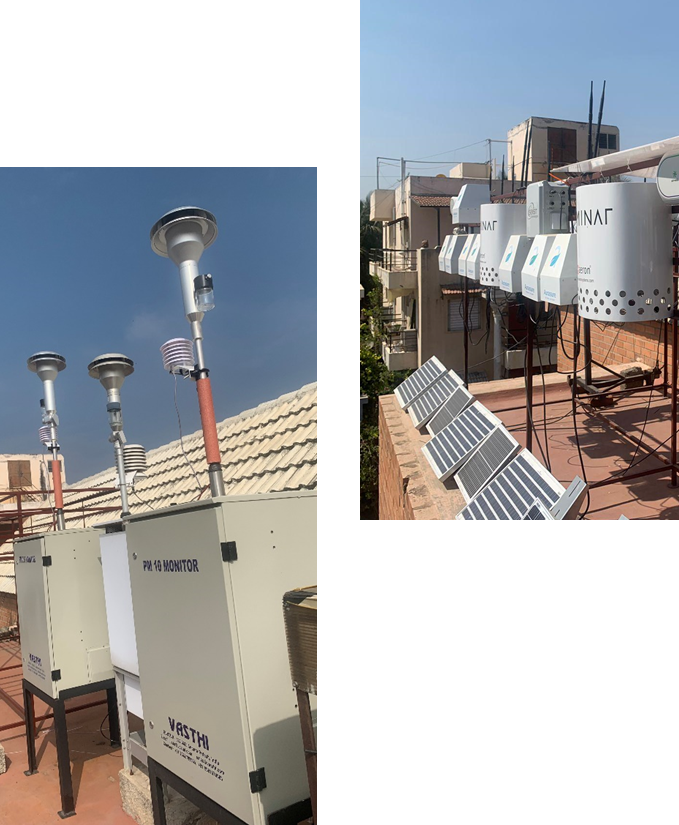
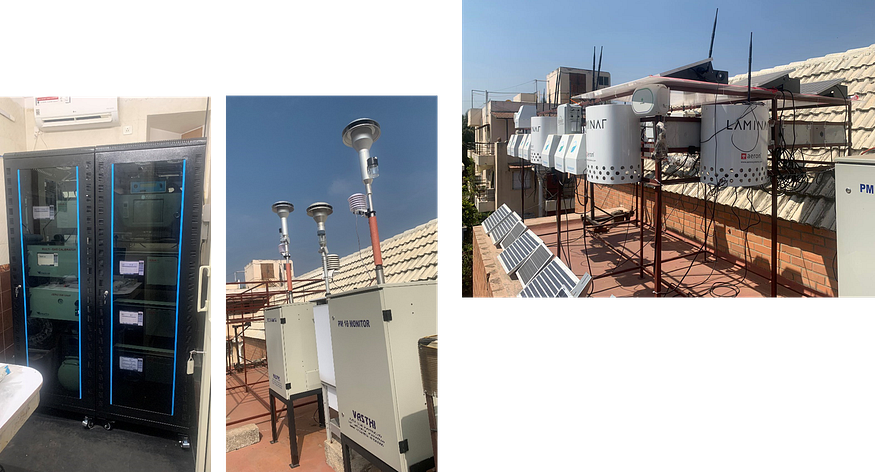
There has been tremendous progress on the use of air sensors in South Asia. Researchers presented studies from rural Tamil Nadu, Delhi, Bengaluru, and Pakistan. The sensor evaluation facility established at the Center for Study of Science, Technology and Policy (CSTEP), India Sensor Evaluation and Training (Indi-SET), was also widely appreciated during the session. However, there is still a lot of work to be done to ensure that policymakers in India can rely on sensor data and hybrid networks become the norm rather than pilot projects. Furthermore, best-use cases should be developed for sensor data for hyperlocal monitoring, exposure assessment, and hotspot identification.
The authors work in the Air Quality sector at the Center for Study of Science, Technology and Policy (CSTEP), a research-based think tank.
More About Publication |
|
|---|---|
| Date: | 05 July 2024 |
| Contributor | |
| Publisher: | CSTEP |
| Related Areas: | |
Get in touch with us at
cpe@cstep.in