
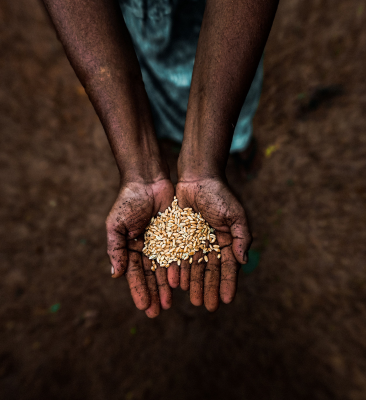
Every summer, as temperatures soar above 40°C across India, attention turns to heatwaves, dry spells, water shortages, and power cuts. What rarely makes its way into mainstream conversations is the slow and persistent process that feeds all these crises: land degradation and desertification. So, let us mark the World Day to Combat Desertification and Drought (observed each year on June 17) by turning our attention to the threat India faces on this front.
According to the Desertification and Land Degradation Atlas of India published by Isro’s Space Applications Centre, about 30% of India’s geographical area — spanning 97.85 million hectares — is undergoing land degradation. Of this, a staggering 25% is experiencing desertification. This is not merely an environmental problem. Land degradation can manifest in various ways across agro-ecological systems: structural changes in forest cover and biomass reduction, salinisation of irrigated drylands, and soil nutrient decline in croplands due to erosion. Given the intertwined nature of social and ecological systems, land degradation typically reduces resilience, stripping a system of the ability to maintain its structure and sustain basic functions under stress. This, in turn, increases pressure on ecological systems, creating a spiral of degradation as soil resources deplete and vegetation deteriorates.
Click here to read more
More about publication |
|
|---|---|
| Date | 17 June 2026 |
| Type | Op-eds/Interviews/Press Releases |
| Contributors | |
| Publisher | Hindustan Times |
| Related areas | |
Get in touch with us at
cpe@cstep.in