


As I travelled towards the Aghanashini Estuary along the Karnataka coast, India, the landscape gradually changed. The air became warmer and more humid, carrying the unique scent of the sea.
Soon, a broad expanse of water appeared on the horizon. I had reached one of the estuary’s tidal channels.
The visit coincided with the early days of the south-west monsoon. Clouds drifted inland while the estuary quietly rested under low-tide conditions.
Along the shoreline stood patches of young mangroves, fragmented yet vibrant.
The low tide exposed broad stretches of muddy shoreline, revealing the intricate boundary between land and water which we see around estuarine ecosystems.
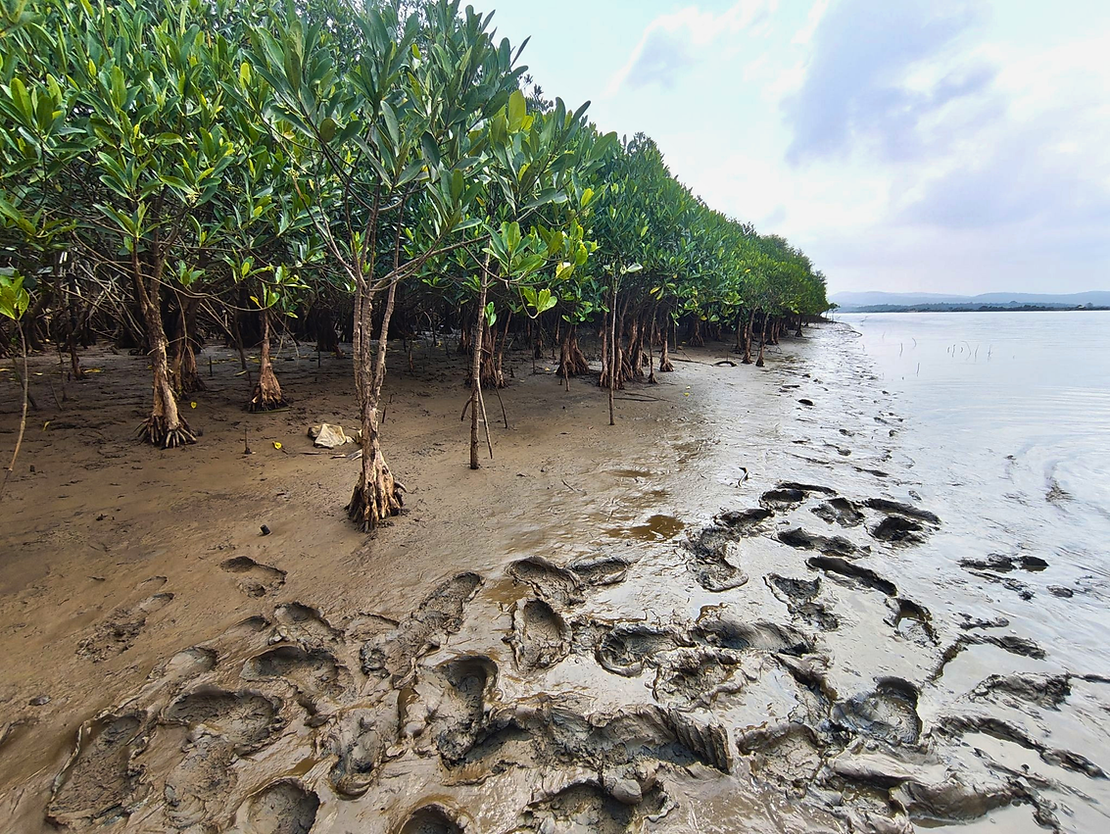
My journey continued deeper into the estuary by boat. Stepping onto a mangrove island, I was immediately drawn to the remarkable root systems.
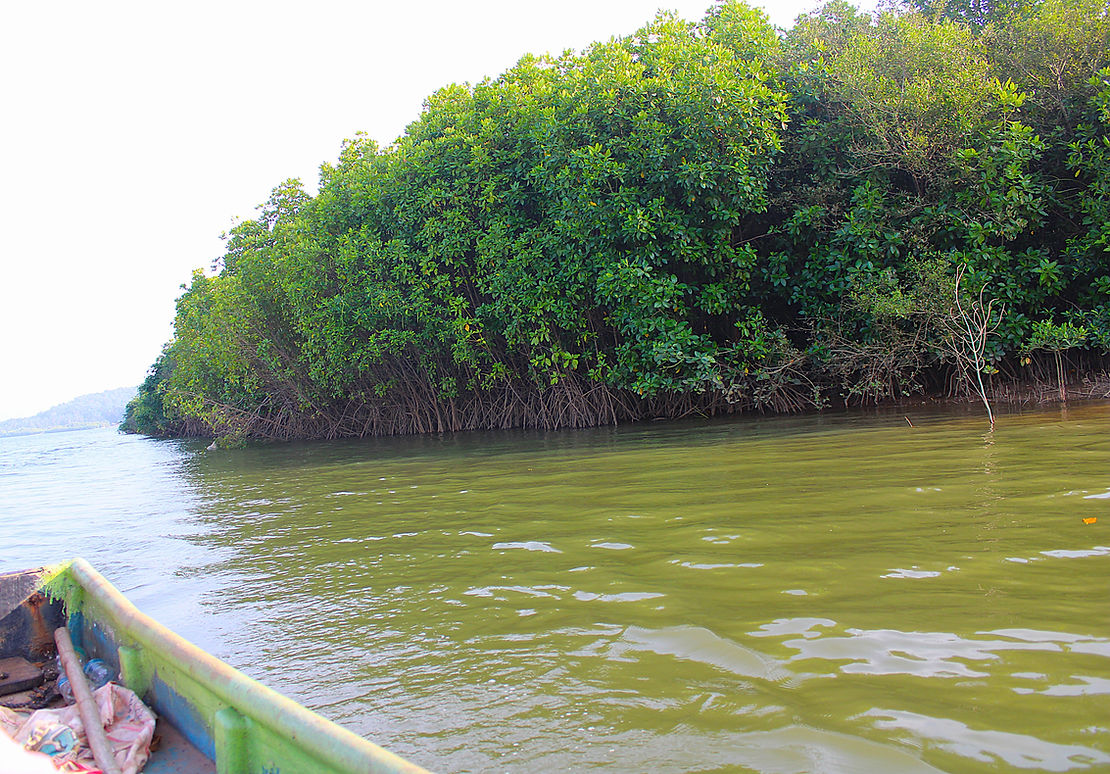
My feet sank into the sediments.
What appeared to be ordinary mud revealed itself as one of the estuary’s most important ecological assets.
Walking across the soft mud was surprisingly challenging; each step pulled me deeper as the ground gave away beneath my feet.
Beneath the recently deposited brown surface layer spread dark, rich soil. These sediments, holding the foundation of this ecosystem, extend from the roots below to the canopy above.
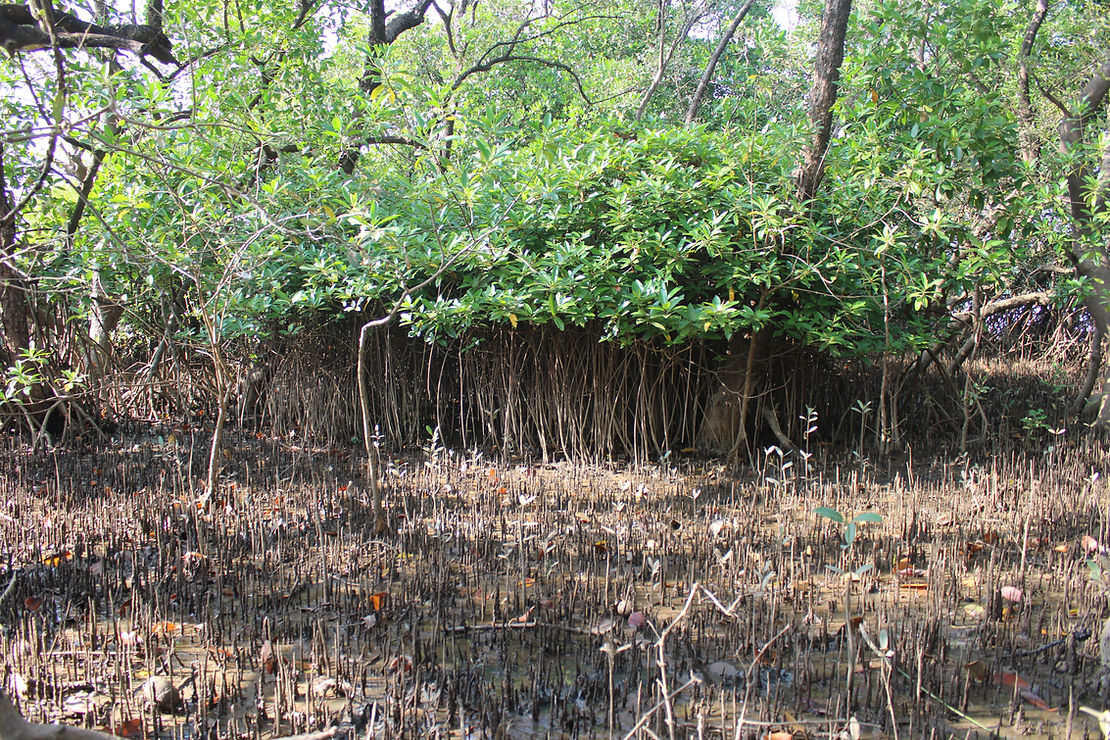
Looking upward from the roots, the dense green canopy created a completely different world.
Sunlight filtered through the leaves while birds moved between branches.
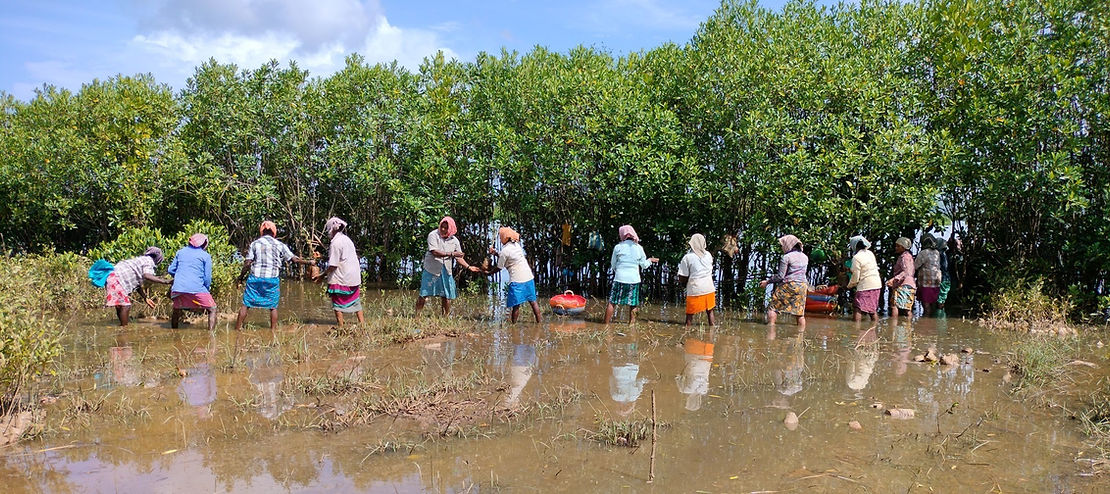
Standing in the mangrove mud later that day, I realised that many of the estuary’s most valuable functions remain hidden in plain sight.
Beneath the surface lies carbon accumulated over decades, telling a story as old as time.
Above the surface tells another story which intertwines livelihoods, biodiversity, and ecosystem processes, all coexisting in a changing landscape.
As I left the estuary, I carried with me a deeper appreciation of the connections between roots, canopy, and community.
Coastal ecosystems worldwide are facing increasing pressure from climate change and development [1,2].
Places such as the Aghanashini Estuary remind us that conserving nature is also about sustaining the people and processes that depend upon it.
[1] V. Selvam et al., “IUCN Red List of Ecosystems, Mangroves of South India and Sri Lanka, and Maldives,” May 08, 2024. doi: 10.32942/X21K7F.
[2] S. Hülsen, L. E. Dee, C. M. Kropf, S. Meiler, and D. N. Bresch, “Mangroves and their services are at risk from tropical cyclones and sea level rise under climate change,” Commun Earth Environ, vol. 6, no. 1, p. 262, Apr. 2025, doi: 10.1038/s43247-025-02242-z.
The blog was originally published by the British Ecological Society.
In our previous blog in the Measuring the Microns series, we briefly...

In this blog series titled Measuring the Microns, we examine why greater...

India’s transition to a cleaner power system has moved from a supply...

In the first blog in ‘The AI shift’ series, we examined what...
With growing electricity demand, renewable energy penetration, and storage requirements, Indian distribution...

In the first blog in ‘The AI shift’ series, we looked into...