


The sixth edition of India Clean Air Summit called for a participatory approach to the future of air quality management.
The sixth edition of the India Clean Air Summit — CSTEP’s flagship event highlighting air pollution — was held from 26 to 30 August in Bengaluru. Hosted in collaboration with the Clean Air Monitoring and Solutions Network (CAMS-Net), the central theme of this year’s summit was The Participatory Future of Air Quality Management. Scientists, researchers, policymakers, and air sensor manufacturers from across the globe discussed various issues surrounding air pollution management during the summit.
CSTEP’s policy brief Stubble Management: Harnessing Ex-Situ Options and Market Mechanisms was launched during the summit. CSTEP also launched a portal for visualising the findings of the Emission Inventory, a comprehensive study on pollution reduction strategies for 76 non-attainment cities.
Video of the official launch session of CSTEP’s policy brief, Stubble Management: Harnessing Ex-Situ Options and Market Mechanisms
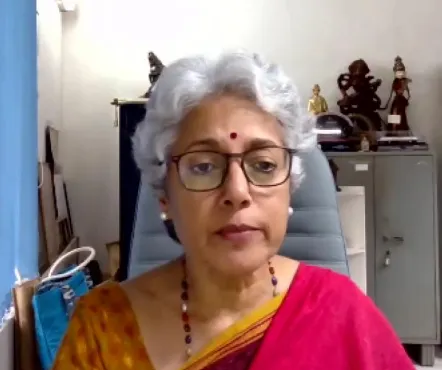
While discussing the topic of household air pollution during the plenary panel, Dr Soumya Swaminathan, Principal Advisor, Ministry of Health and Family Welfare, pointed out that according to studies done in Delhi, women’s average exposure to high levels of black carbon (women who were at home mostly) was as much as autorickshaw passengers exposed to ambient air pollution in Delhi, which resulted in higher systolic blood pressure.
Prof. Kalpana Balakrishnan, Director, WHO Collaborating Center for Occupational and Environmental Health, opined during the same session that the main barrier to shifting to clean cooking fuels that could help reduce household air pollution levels was finance. She stated that if free LPG is given to poor rural women for 2 years, they are unlikely to shift back to biomass cooking.
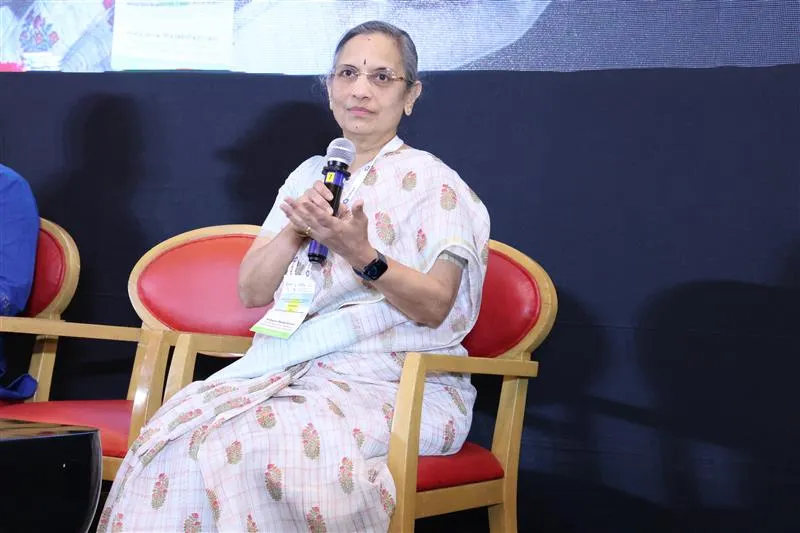
The India Clean Air Summit has evolved into a key platform for sharing knowledge on diverse aspects of air pollution. It unites scientists, community organizations, and policymakers to foster collaboration and develop comprehensive, science-based solutions to address air pollution challenges.

Snow-covered mountains, pristine lakes, green valleys—this is the Kashmir we know. But...

Amid the global oil shocks caused by the West Asia conflict, there...
Air doesn’t care about man-made boundaries. Our responses to managing air quality,...
As I travelled towards the Aghanashini Estuary along the Karnataka coast, India,...

Just over a year ago, an artificial intelligence (AI)-generated recreation of Sir...
With India’s Carbon Credit Trading Scheme (CCTS) expected to become fully operational...