


As India’s power system transforms with higher renewable energy penetration, integrating energy storage facilities with renewable capacity is becoming critical to ensure system reliability, grid flexibility, and cost-effectiveness. Although RE-plus-storage solutions are becoming increasingly viable, their large-scale deployment and effective scaling require both well-designed, robust technical configurations and productive procurement frameworks that align with system needs and evolving market mechanisms. Building on the foundations of our Creating GreenCycles Phase 1, the Creating GreenCycles – Phase 2 project expands its focus to strengthening tendering frameworks and advancing the technical understanding of renewable-plus-storage integration.
The project aims to enable utilities and Renewable Energy Implementing Agencies (REIAs) to strengthen, design, and innovate tendering frameworks so that 50% of RE capacity auctions are linked to storage. In parallel, the project will evaluate various AC and DC coupling configurations for co-located solar PV and battery energy storage systems (BESS), assessing the influence of power electronic interfaces on system performance, efficiency, grid stability, and reliability, from technical, policy, and economic perspectives. This work would enhance the least-cost model while also incorporating central- and state-level stakeholder feedback, thereby contributing to the examination of key technical, policy, and regulatory challenges that may have a vital impact on the implementation of collocated RE-plus-storage procurement strategies.
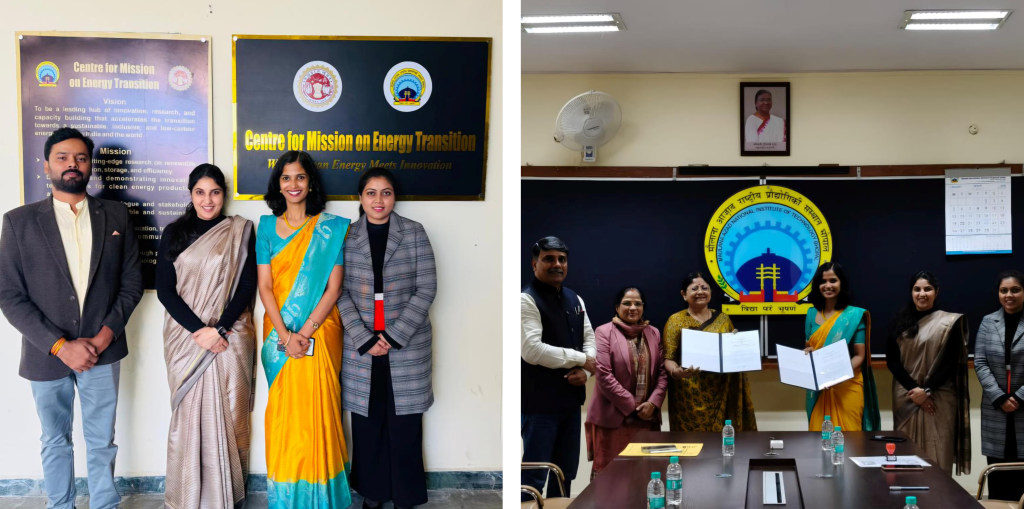
This is a consortium project in collaboration with the Center for Strategic and International Studies (CSIS). The project combines technical assessment studies, policy review, and stakeholder engagement, to be carried out in collaboration with Maulana Azad National Institute of Technology (MANIT), Bhopal, to develop ground-level, actionable outputs.
The work outcomes would help in strengthening the practical application of renewable-plus-storage solutions and support the development of scalable, reliable, and economically efficient pathways for India’s clean energy transition.