
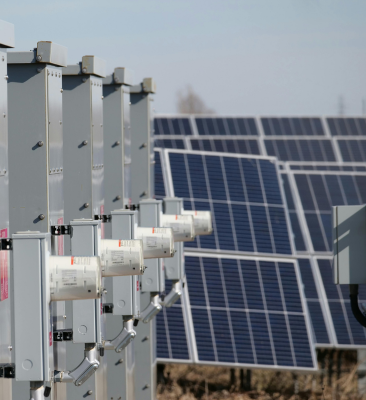
The techno-economics of firm block power supply from hybrid solar photovoltaic–battery energy storage systems (BESSs) are central to achieving reliable and dispatchable renewable energy. This study evaluates grid-connected solar BESS hybrid systems designed to deliver firm 250 MW power blocks over 4-hour, 6-hour, and 8-hour durations during daily morning and evening peaks. Multiple combinations of solar and BESS capacities were analyzed to identify system configurations that minimize the levelized cost of energy (LCOE) while maintaining supply reliability. The BESS was assumed to be charged solely by solar generation, with any surplus solar photovoltaic output curtailed after storage saturation. Results demonstrate that LCOE and reliability are strongly influenced by the solar-to-storage ratio and dispatch duration. Moderate solar oversizing enhances reliability and reduces unmet demand, whereas excessive scaling leads to diminishing economic returns due to higher capital costs and energy curtailment. The study underscores the importance of optimally balancing solar photovoltaic capacity and storage sizing to design cost-efficient, firm renewable-plus-storage systems capable of meeting peak-period demand reliably.
Click here to read the full article
More about publication |
|
|---|---|
| Date | 13 April 2026 |
| Type | Academic Papers |
| Contributors | |
| Publisher | Energy Proceedings |
| Related areas | |
Get in touch with us at
cpe@cstep.in