
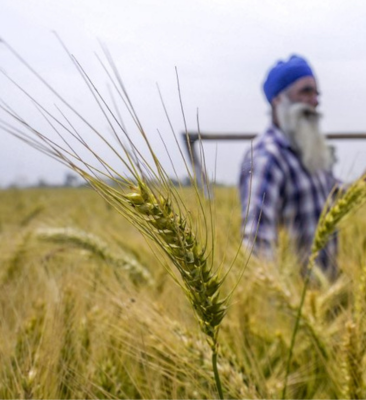
Union Budget 2026–27 has allocated Rs 1,62,671 crore to agriculture and allied activities, a 7% increase over the 2025 26 revised estimate, signifying a continued focus on farmer progress, food security, and data-driven technology.
The Budget has also strengthened the shift towards digital and data-driven governance and at the forefront of this transition is Bharat-VISTAAR (Virtually Integrated System to Access Agricultural Resources) – a multilingual, AI-powered advisory platform envisaged to bridge information gaps and deliver personalised farm guidance. With an allocation of Rs 150 crore for its implementation, Bharat-VISTAAR is one of India’s most ambitious initiatives for converting fragmented agricultural data into actionable insights.
Alongside their integration into Bharat-VISTAAR, efforts to design a micro-level, customised interface for FPOs/ FPCs should also be taken up to support efficient operational functions that simplify administrative work such as tracking member production, supporting collective decision-making, enabling bulk input procurement, and strengthening negotiations with buyers, lenders, and insurers.
However, even the most accurate advice may fail to translate on the ground in instances where legacy policy incentives such as minimum support price or urea subsidies create lock ins that constrain farmer choices. So, to be able to go beyond delivering incremental benefits and unlock systems change, Bharat-VISTAAR should be designed as much as a policy feedback instrument as a farmer-advisory tool.
This ambition, in turn, depends critically on farmers’ consent for and trust in data sharing, particularly as private partnerships expand, making ethical, transparent, and legally responsible data governance central to the platform’s credibility.
Click here to read the full article
More about publication |
|
|---|---|
| Date | 5 March 2026 |
| Type | Op-eds/Interviews/Press Releases |
| Contributors | |
| Publisher | The Wire |
| Related areas | |
Get in touch with us at
cpe@cstep.in