
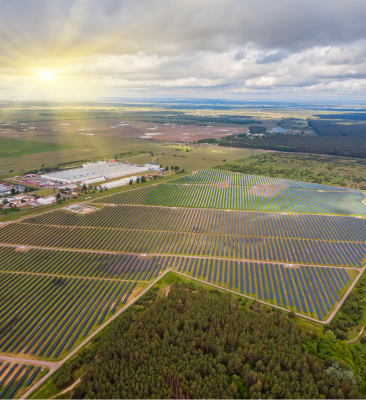
With more than 100 million farmers and land availability shrinking, India cannot afford to trade food security for energy security. Conventional ground-mounted solar projects already account for more than 90 GW of the country’s 120 GW of installed solar capacity, according to statistics from the Ministry of New and Renewable Energy (MNRE). These projects sometimes overlap with agricultural land, affecting cultivation. Agrivoltaics offers a solution. By allowing simultaneous land use for crops and power generation, it shields harvests from heat and water stress, diversifies farmer incomes, and strengthens rural power networks.
Sweat equity
A successful and sustainable path for agrivoltaics requires reimagining the role of farmers. They need to be able to participate in the development process, hold equity, and ultimately become energy entrepreneurs. Farmer producer organizations can allow even marginal farmers to pool resources and negotiate better terms with solar developers. Owning a stake in the PV plant allows for significant earnings from electricity sales, enabling sustainable wealth creation.
The path forward requires supportive policy frameworks with clear technical guidelines. Building trust between developers and farmers will allow strong local participation and ensure that decades of research inform project designs. Recent efforts, including state-level pilots, farmer training programs, and draft policy discussions, signal that India’s agrivoltaics era is beginning to take shape. Aligning all these elements will enable scaling agrivoltaics from pilots to a mainstream pillar of India’s renewable energy landscape in the near future
Read the full article here
More about publication |
|
|---|---|
| Date | 2 October 2025 |
| Type | Op-eds/Interviews/Press Releases |
| Contributors | |
| Publisher | PV magazine |
| Related areas | |
Get in touch with us at
cpe@cstep.in